Frozen pipe marketing comes down to three things: being the business a homeowner finds in the first minute of a search, answering the call or text no matter the hour, and following up so a frozen pipe becomes a booked job instead of a lost lead. Cold snaps do not give you time to build any of that. It has to be in place in the fall. At Coastal Connect we build exactly this for plumbers, HVAC companies and other trades in Rhode Island and Massachusetts: websites that book jobs, local SEO, missed-call text-back and 24/7 AI inbound call handling.
TL;DR
- Frozen-pipe demand arrives in a burst, during the coldest nights, so your Google Business Profile, service pages and phone coverage must be ready before the first hard freeze.
- Homeowners searching at 6 a.m. with no water want three things: a real person, a fast answer and proof you are licensed and trusted.
- Every missed call during a cold snap is a job that likely goes to the next company on the list, so after-hours answering and instant text-back matter more than any ad.
- Track calls answered, missed calls recovered, booked jobs and cost per booked job, not clicks.
- Pair the emergency message with calm, accurate safety guidance. It builds trust and keeps people from making the damage worse.
Table of Contents
- Why frozen pipes are a marketing problem, not just a weather problem
- What a homeowner is actually searching for
- Step 1: Get your local search presence ready in the fall
- Step 2: Build service pages that match the emergency
- Step 3: Answer every call, text and chat, day and night
- Step 4: Use paid and outreach channels that fit emergency demand
- Step 5: Build trust with reviews and clear information
- Step 6: Measure what matters
- How Coastal Connect fits in
- Our view on frozen-pipe season
- FAQ
- Sources
Why frozen pipes are a marketing problem, not just a weather problem
Water expands as it freezes, and that pressure can break a pipe, according to the American Red Cross. Pipes most at risk sit in unheated spaces such as basements, crawl spaces, attics, garages and kitchen cabinets, and along exterior walls with little insulation. In New England, that describes a huge share of the housing stock.
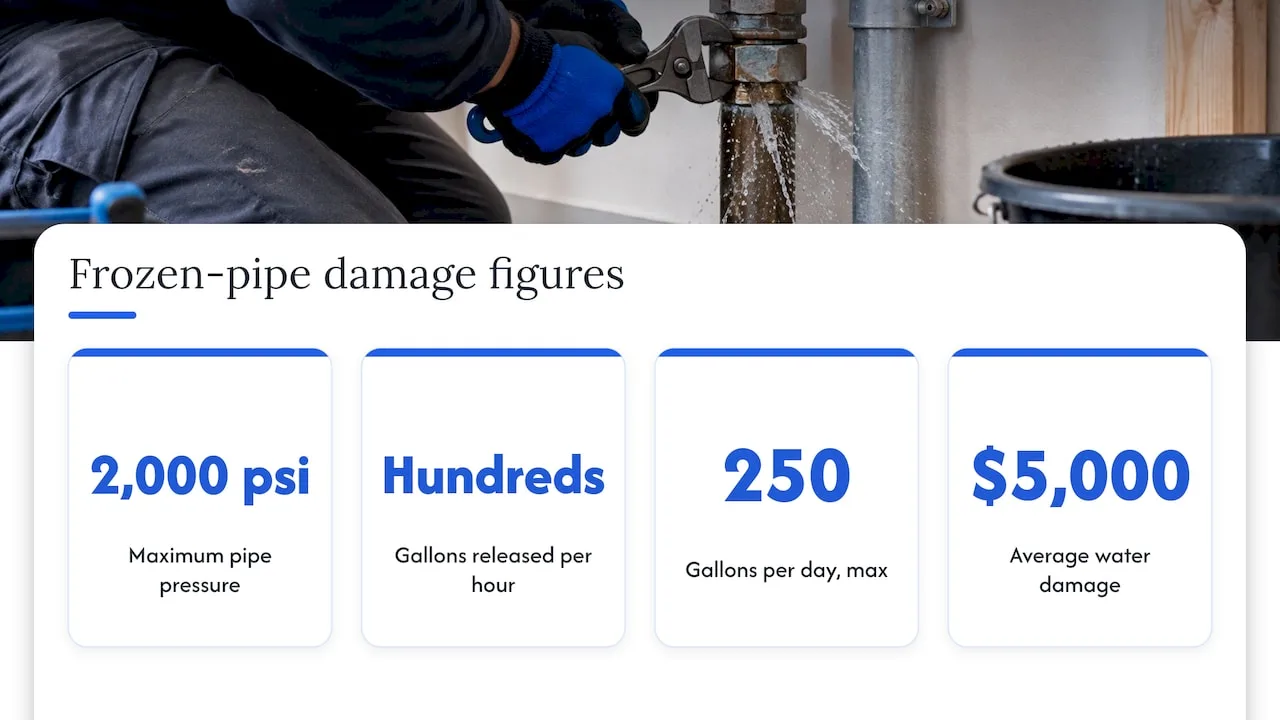
The homeowner’s side of this is stressful and urgent. PropertyCasualty360 reports that freezing water can create as much as 2,000 pounds of pressure per square inch, enough to rupture almost any water-filled pipe, and that a burst pipe can release hundreds of gallons an hour. HowStuffWorks adds that a hairline crack can release up to 250 gallons a day and that water damage from burst pipes is the most common homeowners insurance claim, averaging about $5,000.
Those numbers explain why the buyer behaves the way they do. They are not shopping. They want someone to pick up. For a contractor, the marketing job is simple to state and hard to execute: be visible at the exact moment of panic, and be reachable at the exact moment of panic.
What a homeowner is actually searching for
Read the questions people ask around this topic and you see two groups.
Before the freeze: how cold does it have to get, will my pipes freeze with the heat on, how do I protect exterior and basement pipes. The Farmers’ Almanac puts the pipe-freezing alert threshold at 20°F, notes that water freezes at 32°F and says that below 0°F even insulated pipes in unheated spaces can freeze overnight. The Red Cross advises keeping the house at or above 55°F during a hard freeze.
During the freeze: no water from the tap, only a trickle, a bulging or frosted pipe, popping sounds, how to thaw it, what a plumber costs, whether insurance pays.
Your marketing should have a clear answer for both groups. The first group is your chance to be remembered. The second is your chance to be hired.
Step 1: Get your local search presence ready in the fall
Frozen-pipe searches are local and mobile. The homeowner types a phrase like “emergency plumber near me” or names their town, sees a map with three businesses and calls one. That makes your Google Business Profile the first page of your website for this customer.
Before the first cold forecast, check these items:
- Categories and services. Your profile should list the services you actually perform in winter: frozen pipe thawing, burst pipe repair, emergency plumbing. Our guide to claiming and building a plumber Google Business Profile walks through the setup.
- Hours and emergency availability. If you take after-hours calls, say so on the profile and the site. If your phone rolls to a voicemail box, that promise falls apart quickly.
- Service areas. Name the towns you cover in Rhode Island or Massachusetts. A homeowner in Cranston and a homeowner in Worcester should both see that you serve them.
- Photos and posts. Recent photos of your trucks, team and real jobs tell a worried homeowner that you are an active business.
- Phone number and tracking. Use one number consistently across the profile, site and directories, and set up call tracking in a way that does not disrupt local rankings. Our checklist on call tracking that keeps SEO safe covers it.
This is the layer we manage under Local SEO and Google Business Profile, so your listing and your website tell Google the same story about where you work and what you fix.
Step 2: Build service pages that match the emergency
A single “Plumbing” page cannot rank for every winter problem and cannot reassure a worried reader. Build separate, specific pages for the situations that drive calls:
- Frozen pipe thawing
- Burst pipe repair and emergency shutoff help
- Pipe insulation and winterization (the pre-freeze page)
- Water damage coordination, if you offer it
- A page for each major town you serve
Each page should open with what the homeowner needs right now: a phone number you can tap, your hours, and a plain statement of what happens when they call. Below that, put the helpful content that proves you know the problem.
Put safe guidance on the page
Pages that only say “call us” lose to pages that also help. The Red Cross guidance is a good model for what to include. If only a trickle comes from a faucet, a pipe may be frozen, and the homeowner should keep the faucet open and apply heat with an electric heating pad, a hair dryer, a space heater kept away from flammable materials, or towels soaked in hot water. Never use an open flame. If the frozen area cannot be found or reached, or the pipe will not thaw, the right step is to call a licensed plumber.
For a burst pipe, Roto-Rooter’s guidance is to turn off the main water supply valve, open connecting faucets and call a plumber. Insurers say the same about the main shutoff: Grange Insurance also advises cutting main electrical power in a flooded area and calling a licensed plumber before filing a claim.
That guidance does two jobs. It helps the reader in the first ten minutes, and it positions you as the licensed plumber they are told to call. Keep it short, scannable and placed above the fold on mobile.
Answer the cost question honestly
“How much does a plumber cost to unfreeze pipes?” is one of the questions Google shows for this topic. Pages that dodge it lose trust. You do not have to publish a price list, but you can explain what drives cost. CNBC Select reports that a typical burst-pipe repair runs around $500, with a range from $200 to $3,000, and that homeowners insurance typically covers much of the resulting water damage but not the repair of the burst pipe itself. Framing your pricing around the same factors, such as access, pipe material and the extent of damage, helps a caller feel they are getting a straight answer.
Our websites that book jobs are built around this idea: each page has one purpose, and that purpose is a booked call or appointment.
Step 3: Answer every call, text and chat, day and night
This is where most frozen-pipe marketing fails. A cold snap sends calls up sharply, and the phones are the weakest point. A homeowner with water running through the ceiling does not leave a voicemail and wait. They call the next number.
Three layers close the gap:
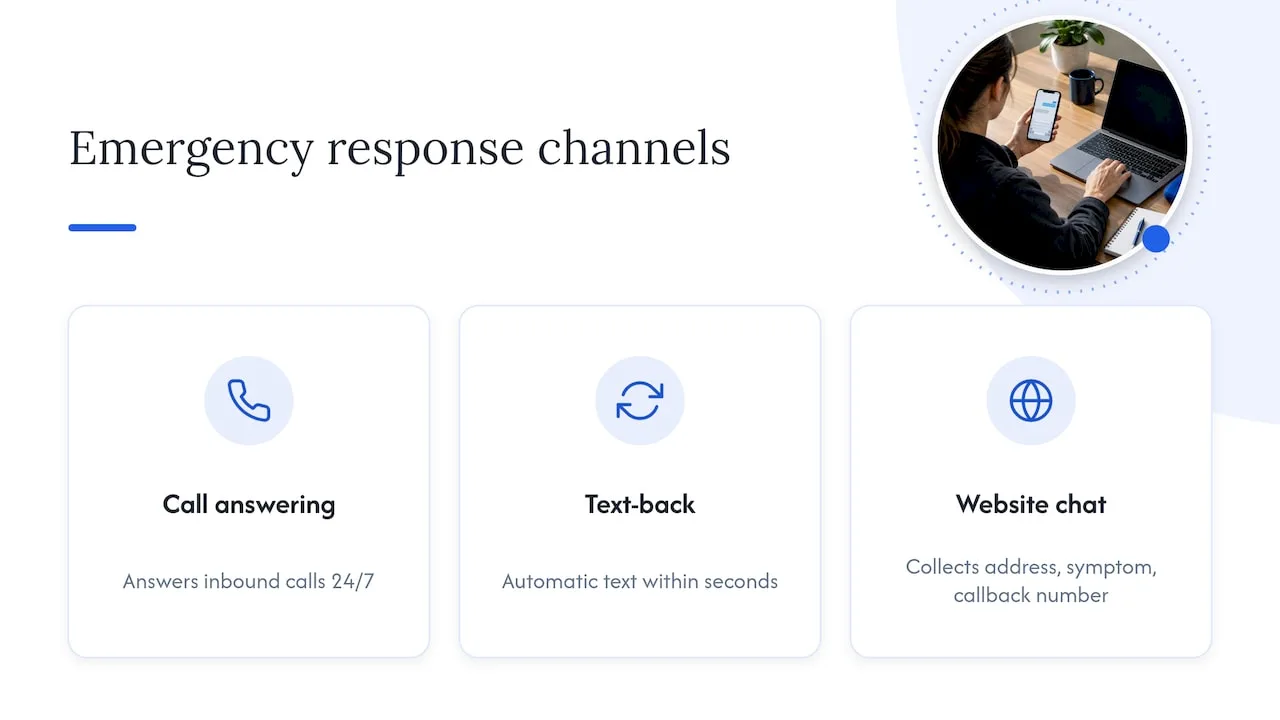
1. A person or system that answers every inbound call. Our AI voice agent provides 24/7 inbound call handling, so a call at 2 a.m. gets answered instead of ringing out. If you want to see how a trial works, our two-week AI call answering pilot lays out the approach.
2. Instant text-back for anything missed. If a call still goes unanswered because every tech is on a job, an automatic text within seconds keeps the lead warm. That is the idea behind our missed-call text-back and CRM setup.
3. Chat on the website. Many people searching on a phone would rather type than call, especially at night. AI website chat can collect the address, the symptom and a callback number, and our chatbot scripts for contractors show the flows that work.
Decide your triage before the storm
Whoever answers, whether a dispatcher or an automated system, needs a clear order of priority. A workable scheme looks like this:
| Situation | What it means | Typical response |
|---|---|---|
| Active leak, flooding, burst pipe | Property damage under way | Walk the caller through the main shutoff, dispatch as soon as possible |
| Frozen pipe, no water, no visible leak | Risk of a burst on thaw | Same-day or next-available appointment |
| Slow or low flow on exterior-wall fixtures | Possible partial freeze | Booked appointment with a clear arrival window |
| Prevention, insulation, winterization | No emergency | Quote request or scheduled visit |
Write these rules down in the fall, and set them in your phone tree and automations. Our guide to phone tree best practices covers the menu fixes that keep an emergency caller from getting lost.
Give callers the right reassurance
A caller who is told what to do in the first minute, such as locating the main shutoff and keeping faucets open, hangs on and waits for you. One who is told nothing keeps dialing. Scripts for your answering system should include the safe first steps from the Red Cross and the instruction to call back if the situation changes.
Step 4: Use paid and outreach channels that fit emergency demand
Emergency searches reward businesses that appear immediately, so paid placements work alongside organic rankings.
- Local Services Ads. These sit above the map results and put your business name, reviews and a call button in front of the homeowner. The leads only pay off if you answer them quickly. We cover the process in converting Local Services Ads leads.
- Search ads during cold forecasts. Turn budgets up when the forecast falls into the teens or lower and pull them back after. Ad copy should mirror what the homeowner types: no water, frozen pipe, emergency, your town, and a phone number.
- Pre-freeze outreach to existing customers. A short text or email before a cold night with simple protection tips and your 24/7 number reminds past customers that you exist. Keep messages compliant with consent rules, and see our guide to contractor lead nurturing automation for how to do it.
- Neighborhood platforms. Posts about winter prep in local groups put you in front of homeowners before the freeze. Our guide to Nextdoor for contractors shows how to book estimates there.
- Local links and community mentions. Town websites, hardware stores and local news that mention your winterization tips strengthen local rankings over time. We list ideas in local link building for contractors in RI and MA.
HVAC companies can use the same playbook with a different message. Furnace failure during a cold snap is its own emergency, and the same call coverage applies. Our HVAC SEO keywords guide covers the pages to build.
Step 5: Build trust with reviews and clear information
When a homeowner is choosing between two emergency plumbers within a minute, reviews and clear terms decide it. The things worth showing on your profile and site are response time, upfront pricing, any guarantee you offer, and the fact that your team is licensed and insured.
Reviews are the proof. Ask for them right after the job, while the relief is fresh. A homeowner whose pipe was thawed at 7 a.m. is far more willing to leave five stars that day than a week later. Automated review requests send the request without a tech having to remember, and our guide to compliant automated review requests explains how to keep that process within the rules.
Reply to every review. In winter, a short reply that names the problem, such as a frozen supply line or a burst pipe in a crawl space, also adds searchable, relevant wording to your profile in a natural way.
Step 6: Measure what matters
Frozen-pipe marketing is easy to judge badly. A good week of calls looks like success even if half of them went unanswered. Track these numbers instead:
| Metric | Why it matters |
|---|---|
| Calls received vs. calls answered | Shows how many emergency leads never reached you |
| Missed calls followed up within minutes | Shows whether text-back and call-back are working |
| Booked jobs per channel (profile, ads, site, referral) | Shows where the work actually comes from |
| Cost per booked job | Ties ad spend to revenue, not clicks |
| Average job value | Separates thaw visits from burst-pipe and water-damage work |
| Review count and rating before and after winter | Shows trust building over time |
Review the numbers after each cold snap. Which pages got the calls? Which hours were missed? Which towns produced the most jobs? Those answers set next year’s budget. Our 90-day roofing lead generation guide shows the same cost-per-booked-job approach in another trade.
How Coastal Connect fits in
Everything above works as one system: the profile and pages that get you found, the phone and chat coverage that catch every lead, and the review and follow-up flow that turns a rescued homeowner into a five-star story. We build and run that system for contractors in Rhode Island and Massachusetts, with a local team that knows the towns and trades we serve.
Plans are published on our pricing page: Foundation is $597 per month, Growth is $1,297 per month and Scale is $2,497 per month. An AI employee on Growth is $199 per month, and extra locations start from $299 per month.
If your phones go quiet or unanswered every time the temperature drops, start at coastalconnect.ai and we will set up your winter coverage.
Our view on frozen-pipe season
Every winter, we hear the same story from plumbers: the cold snap hit, the phones lit up, and the team could not keep up. The calls that got lost were not lost to better plumbers. They were lost to whoever answered first.
That is why we treat lead capture as the center of a contractor’s marketing, not an extra. A website that ranks but sends callers to voicemail has done half the job. A great profile with no review flow leaves trust on the table. So we build these pieces to work together: local SEO, a website made to book jobs, automated follow-up, review requests and 24/7 call handling.
We focus only on contractors in Rhode Island and Massachusetts, so we know which towns you serve and how your customers search. Frozen pipes are one season, but the same system carries you through every other one: roofing in spring, AC in summer, heating in fall.
If you want to be ready before the next hard freeze, September and October are the time to start, not January.
Tyson
FAQ
When should a contractor start frozen-pipe marketing?
In early fall, before the first cold forecast. Profile updates, service pages and call-handling setup take time, and search rankings take weeks to respond. Ad budgets and customer texts can then be switched on the moment a hard freeze is forecast.
What temperature should we build campaigns around?
Build around the thresholds homeowners hear about. The Farmers’ Almanac cites 20°F as an alert level for pipe freezing and 32°F as the freezing point of water. Use forecast lows in the teens and below as your trigger for ad budgets and customer reminders, adjusted to your own area and call history.
What should a frozen-pipe page tell homeowners?
It should give your phone number and hours first, then the safe first steps: keep the faucet open, apply gentle heat, never use an open flame, shut off the main valve for a burst pipe, and call a licensed plumber when the pipe cannot be found or thawed. Add how you price and the towns you serve.
How do we know whether the marketing is working?
Count booked jobs and cost per booked job by channel, and compare calls received with calls answered. If the second number is lower than the first, the fix is coverage, not more traffic.
Sources
- Preventing & Thawing Frozen Pipes, American Red Cross
- The big freeze: 5 signs your pipes are frozen, PropertyCasualty360
- What causes pipes to burst when they freeze, HowStuffWorks
- How To Prevent Frozen Pipes This Winter, Farmers’ Almanac
- Frozen Pipe Prevention and Repair Services, Roto-Rooter
- Frozen Pipes: Prevention Tips & What to Do, Grange Insurance
- Does Insurance Cover Burst Pipes?, CNBC Select