For a contractor, E-E-A-T comes down to one question: can a stranger, and Google’s systems, see proof that you are a real, licensed, experienced company that does this work in this town? Google defines the term as experience, expertise, authoritativeness and trustworthiness. You earn it by publishing evidence: finished jobs, real reviews, credentials, and service pages that name the work and the towns you serve. Slogans don’t count. At Coastal Connect we build websites and local search systems for plumbers, HVAC companies, electricians, roofers and landscapers in Rhode Island and Massachusetts, so this guide is written for owners who want phones ringing, not for people who want to study an acronym.
TL;DR
- E-E-A-T stands for experience, expertise, authoritativeness and trustworthiness. Google says trust is the most important of the four, and the other three feed it.
- It is not a score or a switch. It is a lens Google uses to judge whether a page is reliable, and it carries extra weight on topics that affect health, finances or safety, which includes much of home service work.
- Contractors prove it with specifics: dated job records, exact license details, named towns, real reviews that get answered, and a real owner with a name and a face.
- Measure it by booked jobs, not rankings. Track calls, form leads, accepted inquiries and won work.
Table of Contents
- What E-E-A-T actually means for a trades business
- Why home services get held to a higher standard
- Turn each claim into evidence
- Reviews are your strongest outside proof
- Service pages that show real expertise
- Make your business details match everywhere
- Trust is also how fast you answer
- Measure inquiries and booked jobs, not rankings
- Where we can take this off your plate
- Our view: trust is built in the field, then published
- FAQ
- Sources
What E-E-A-T actually means for a trades business
E-E-A-T is a framework from Google’s Search Quality Rater Guidelines, the document Google gives to the human reviewers who test how well its search results work. Those raters don’t rank your site. Their feedback helps Google check that its automated systems surface reliable pages.
The first version was E-A-T. In December 2022 Google announced it had added Experience, asking whether content shows first-hand knowledge, such as having used a product, visited a place or lived through what the page describes. For a contractor that is the easiest letter to win. You have actually replaced the water heater, re-flashed the chimney and traced the tripped breaker. Most of your competitors’ websites don’t show it.
Here is each letter in trade terms:
| Letter | What Google wants to see | What it looks like on a contractor’s site |
|---|---|---|
| Experience | First-hand work | Dated job write-ups with your own photos, in named towns |
| Expertise | Depth of knowledge | Service pages that explain the problem, the options and the cost drivers |
| Authoritativeness | Others treat you as a go-to source | Reviews, local mentions, supplier or manufacturer credentials, community involvement |
| Trustworthiness | You are who you say you are | License numbers, insurance, a real address and phone, written warranty terms |
One point trips people up. Google’s own guidance says E-E-A-T is not a specific ranking factor, and that content doesn’t have to show all four elements. Some pages help mainly because of the experience behind them, others because of the expertise. So don’t hunt for a magic badge. Treat E-E-A-T as a way to audit whether your site gives a nervous homeowner enough reason to call.
Why home services get held to a higher standard
Google’s guidance says its systems give extra weight to trust signals on topics that could affect a person’s health, financial stability or safety. A homeowner choosing who works on their gas line, panel, roof or furnace is making a decision on exactly that ground. A bad electrician is a fire risk. A bad roofer is a ruined ceiling and a large bill.
That is the reason generic copy such as “quality workmanship, free estimates” does so little. It could sit on any contractor’s site in any state. The homeowner can’t verify it, and Google’s systems have nothing in it to learn from.
Turn each claim into evidence
The most useful habit is simple: every claim on your site needs matching proof next to it.
- “We’re licensed and insured.” Name the license or registration type, who holds it (the company or the owner), the number, and what it covers. Add the insurance carrier or the fact that certificates are available on request. Show that in a footer, on an About page and on service pages for permitted work.
- “We’ve done hundreds of these.” Show finished jobs with a date, the town, what was wrong and what you did.
- “We guarantee our work.” Publish the warranty in writing: what is covered, for how long, and who stands behind the parts and the labor.
- “Family owned, local.” Put the owner’s name, photo and a short bio on the page, with your real address and a phone number that rings at your business.
None of this requires a blog. A contractor with a two-truck operation is exactly the kind of small, local, go-to source these guidelines describe. The gap is usually that nothing about the business is published, not that the business is weak.
Keep a one-minute record for every finished job
The single habit that produces most of your experience evidence is a short record at the end of each job. Capture:
- Date finished
- Town (and neighborhood if it helps)
- The problem the customer had
- The work done and the main materials or equipment
- Whether a permit was pulled
- Before-and-after photos, taken with the customer’s permission
From those six lines you can build a project page, a Google Business Profile post and a short answer to a customer’s question, all from the same real job. Use your own unedited photos. Stock images say nothing about you, and visitors can tell.
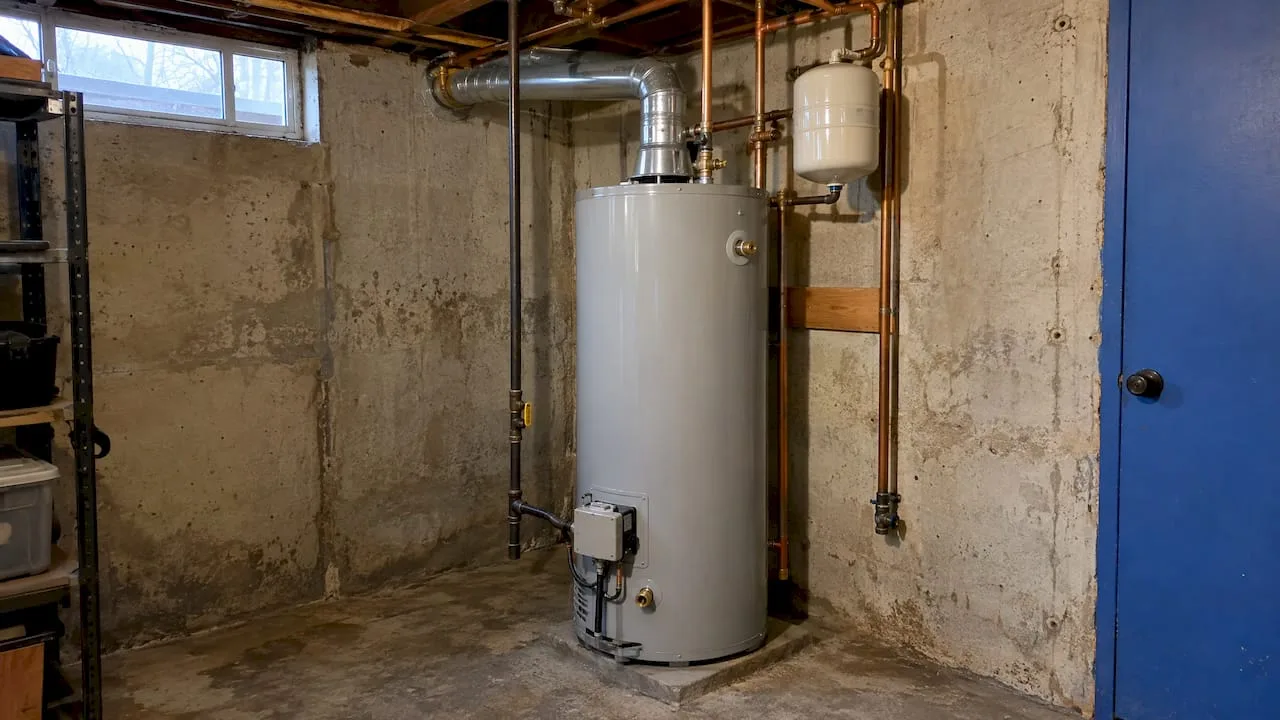
Here is what one looks like in practice: “Replaced a 40-gallon gas water heater in a Cranston basement, February 2026. Old tank was leaking at the base. Installed a new unit, new venting connection and expansion tank, permit pulled and inspected.” That is three sentences, and it carries experience, expertise and trust together.
Reviews are your strongest outside proof
Authoritativeness is what others say about you. For most local contractors, that mostly means reviews. Search Engine Land notes that your overall rating appears on your Google Business Profile listing and that Google uses review count and rating when ranking local results. It suggests asking for reviews with a QR code after the job, a link on the invoice, or a thank-you text or email.
A few practices make reviews work harder as evidence:
- Ask at the moment of peak satisfaction. The tech who just finished the job, with the customer standing there, gets better responses than an email a week later.
- Make it one tap. A direct link to your Google review form beats “search for us and leave a review.”
- Answer every review, good and bad. A calm, specific reply to a bad review shows how you treat customers when something goes wrong. Our review response examples for contractors give you wording you can adapt.
- Encourage detail. A review that mentions the town and the work (“replaced our boiler in Warwick”) confirms where and what you actually do, which a generic five-star rating can’t.
If you want a second angle on how reviews connect to search visibility, this piece on local SEO leads for service businesses covers how searches become calls.
In practice, the weak point is rarely getting happy customers. It is asking consistently. That is why we treat review requests as an automated step after every job rather than something a busy crew remembers on a good day.
Service pages that show real expertise
Search Engine Land recommends a separate page for each service, so each can be built around one specific job, plus social proof such as testimonials, trust badges and awards on the homepage. A single “Services” page listing everything you do can’t carry the depth that expertise needs.
Google’s people-first guidance gives you questions to test each page against. Does it show first-hand expertise and depth of knowledge? Does the site have a clear purpose? Would a reader leave feeling they learned enough to reach their goal? Apply those to a page such as “Boiler replacement.” A strong version covers:
- Signs the boiler is at the end of its life, and what a repair can and can’t do
- What drives the price: size, fuel type, venting, controls, the condition of the existing piping
- How long the job takes and what the homeowner needs to prepare
- Permits and inspections, stated plainly
- Two or three of your own recent jobs, with towns and dates
- Your warranty, in writing
Write as the person who does the work. If your lead technician can explain it better than you, have them review it or put their name on it. A real name with real credentials beats an anonymous company voice.
Name the towns, but don’t fake them
Mentioning the places you serve is useful, because it tells both people and search engines where you work. It goes wrong when owners copy one page fifty times and swap the town name. Those thin, near-identical pages are what Google’s spam policies call doorway pages, and they undermine trust rather than build it. A town page earns its place only when it holds something true and specific to that area: jobs you’ve done there, local permitting quirks, housing stock you commonly work on, and reviews from customers there. We explain the line in our guide to service area pages without doorway penalties.
Make your business details match everywhere
Trust also depends on consistency. Your business name, address and phone number should read the same on your website, your Google Business Profile and the directories that list you. A mismatch is a small red flag for people and a confusing signal for search systems.
A short checklist:
- Your site, Google Business Profile and major directories show the identical name, address and phone number.
- The categories on your profile match the work you actually want. Our guide to testing Google Business Profile categories shows how to evaluate changes over 60 to 90 days.
- Hours and service areas are accurate, including after-hours or emergency availability.
- Your job photos on the profile are your own, and they are recent.
- Your site marks up your business details so machines can read them. See local business schema for contractors.
Trade-specific walk-throughs are here: plumber profiles, HVAC profiles and landscaper local SEO.
Trust is also how fast you answer
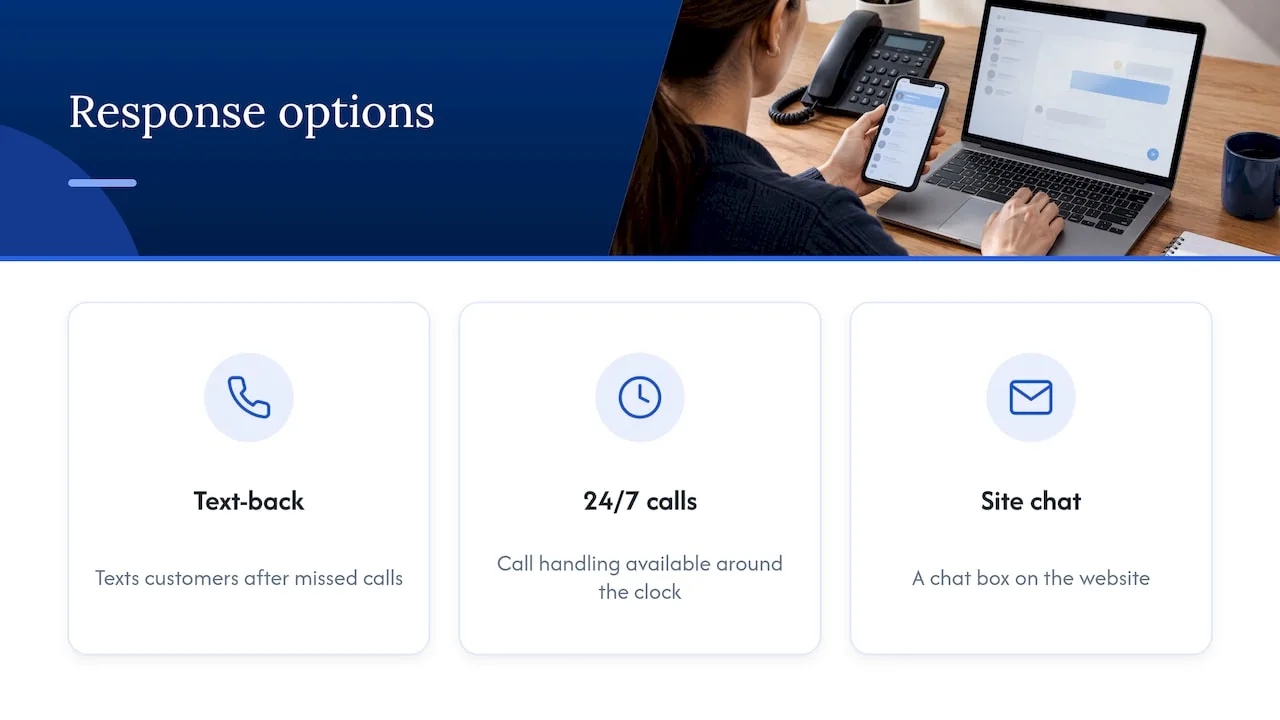
A site that earns the click and then sends the call to voicemail has wasted its credibility. For a plumber or HVAC company, the customer with a burst pipe or a dead furnace calls the next listing within minutes. Answering fast is trust you demonstrate, not just claim. Missed-call text-back, 24/7 call handling and a chat box on the site close that gap. If this is your weak point, start with our guide to keeping night leads with after-hours answering.
Measure inquiries and booked jobs, not rankings
Better E-E-A-T work is only worth it if it produces work on the schedule. Define the outcome in business terms: a confirmed appointment or a won job. Then track the stages leading up to it: a relevant visit, an inquiry, a qualified inquiry, a booking.
When visits go up and jobs don’t, check in this order:
- Did the service page get more relevant visits, or just more traffic from the wrong searches?
- Did the calls and forms actually reach you? Test your forms, call tracking and text-back.
- If visits rose but inquiries didn’t, fix the page: the offer, the form, the mobile experience.
- If inquiries rose but bookings didn’t, the problem is response time and availability, not marketing.
- If bookings rose but won jobs didn’t, look at your estimates and sales process before changing your ads.
Your CRM or booking record is the source of truth here. Rankings are interesting, but they don’t pay the crew. Calls from your Google Business Profile, form leads and booked appointments do.
Where we can take this off your plate
Everything above is work, and most owners do it at night after a full day on site. We handle it as a package for contractors in Rhode Island and Massachusetts: websites that book jobs, local SEO and Google Business Profile optimization, automated review requests and missed-call text-back with a CRM, so a lead that comes in at 9 p.m. still gets a response.
Our plans are published on the pricing page: Foundation at $597 per month, Growth at $1,297 per month and Scale at $2,497 per month. An AI employee on Growth is $199 per month, and extra locations start at $299 per month.
If you’d rather talk through your own situation, start at coastalconnect.ai.
Our view: trust is built in the field, then published
We work only with contractors in Rhode Island and Massachusetts, and one pattern shows up again and again. The business is almost always better than its website suggests. The tech knows the old two-family houses in Providence, the owner has fixed the same boiler problem for years, and customers say so in person. None of it is visible online.
That is why we don’t start with tricks. We start with what is true and provable: your license details, your finished jobs, your reviews, your towns. Then we build the site, the Google Business Profile and the follow-up systems that put that proof in front of a homeowner at the moment they search.
We also think trust includes speed. A well-built page that sends a call to voicemail loses to a plainer page that answers. So our approach pairs local SEO with 24/7 inbound call handling, automated review requests and text-back, run by a local team that knows the towns and trades we serve.
If you take one thing from this guide, make it the one-minute job record. Do it for a month and you’ll have more real proof than most competitors publish in a year.
Tyson
FAQ
Is E-E-A-T a Google ranking factor for contractors?
Not as a single score. Google’s documentation says E-E-A-T isn’t a specific ranking factor, but its systems favor content that shows the qualities behind it, and trust matters most. In practice, you improve it by publishing real evidence of who you are and what you’ve done.
What is the fastest E-E-A-T improvement I can make this week?
Add your license details, owner name and photo, and a written warranty to your site, then post three recent jobs with dates, towns and photos to your Google Business Profile. Reply to every unanswered review. These steps take hours, not months, and they cover trust and experience at once.
Do I need a blog to show E-E-A-T?
No. Detailed service pages, dated job write-ups, answered reviews and consistent business details do most of the work. A blog helps when you have real knowledge to share, such as how to spot a failing sump pump, but thin posts add nothing.
How long until I see results?
It varies by market and starting point, so judge it by the stages that lead to bookings: more relevant visits, more profile calls, more qualified inquiries. Local profile and review improvements usually show up before service page changes do, which is why we track them together.
Sources
- Creating helpful, reliable, people-first content, Google Search Central
- Our latest update to the quality rater guidelines: E-A-T gets an extra E, Google Search Central Blog
- How to do SEO for contractors, Search Engine Land