
Ringless voicemail can be an effective outreach action for contractors when used only with consented or existing leads and measured through a short pilot. It works best as part of an automated nurture or reminder flow, so judge vendors on consent controls, CRM integration, and delivery analytics. Your next step is simple: run a small pilot on a consented list and track callback-to-booking conversion.
TL;DR:
- A few hundred monthly messages suit self serve software; tens of thousands may favor BYOC if a technical person can manage setup and volume commitments.
- Require documented consent and opt out handling plus CRM integration; confirm dedicated callback numbers, two way texting, and reporting that links callbacks to booked jobs.
- Compare complete pilot quotes because subscription fees, per message charges, setup fees, minimums, add ons, and management fees vary; include staff time in your budget.
- Treat ringless delivery as no legal exemption: document explicit marketing consent, honor opt outs, and never send campaigns to purchased lead lists.
- For a controlled test, split a list evenly between two message versions, send during local business hours, and track callbacks through booked jobs.
Table of Contents
- Which ringless voicemail provider types should you shortlist first?
- What should you ask every provider before you sign?
- How much does ringless voicemail cost, and what should you budget?
- Is ringless voicemail legal, and what consent do you need?
- Why does delivery vary, and which metrics prove it works?
- How do you run a ringless voicemail pilot step by step?
- When is ringless voicemail the right channel for contractors?
- How can we handle lead follow-up for you instead?
- FAQ
- Sources
Which ringless voicemail provider types should you shortlist first?
Not every provider fits every contractor. The right class depends on your send volume, your comfort with technical setup, and whether you want to run campaigns yourself or hand them off. Four categories cover most of the market:
- SaaS self-serve platforms: You sign up, upload a list, record a message, and send. This is the fastest start and suits lower volume. The office manager or owner usually runs it, and onboarding often takes a day or two.
- BYOC and wholesale drop models: Here you bring your own carrier connection, such as a SIP trunk or a Twilio account, and pay a low per-drop rate. Per-message costs are lowest, but setup is more technical. Plan on a tech-savvy person, or a contractor-friendly IT helper, and expect a week or more to get stable.
- Enterprise outreach suites: These bundle voicemail drops with SMS, email, and calling, plus deeper reporting and compliance tooling. They fit operations sending large volumes across several crews or locations. A dedicated marketing or operations lead typically owns the platform, and onboarding can stretch across several weeks.
- Agency and white-label providers: Someone else builds the list logic, records the message, schedules the drops, and reports back. You trade some control and margin for a hands-off result. Your involvement is limited to approving scripts and reviewing numbers, and launch can be quick because the agency handles setup.
Providers you will run into while researching include Slybroadcast, Drop Cowboy, LeadsRain, Voicedrop.ai, VoiceSend AI, Dialer360, and Drop. They span self-serve tools, wholesale-style drop services, and more automated platforms, so use the categories above to sort them before you book any demos. A contractor already running a CRM with built-in voicemail drops may not need a separate vendor at all.
If you are sending a few hundred messages a month to past customers, start with SaaS. If you are pushing tens of thousands and have someone technical, BYOC starts to make financial sense.
What should you ask every provider before you sign?
Use the checklist below on every demo call and score each vendor on the same items. Treat the first two as non-negotiable, rate the next three as important, and treat the rest as bonuses.
- Consent and compliance features. Ask how the platform stores consent records, handles opt-outs, and suppresses numbers on do-not-call lists. Ask what guidance they give on prerecorded-message rules. Must-have.
- CRM and scheduling integration. Confirm the tool connects to the system where your leads and estimates already live, and that it supports a dedicated callback number and two-way SMS. Must-have.
- Reporting and analytics. You want delivery checks, callback counts, opt-out rates, and a way to tie callbacks to booked jobs. Important.
- Pricing clarity and throughput. Get the full picture: per-drop fees, monthly minimums, setup charges, add-ons, and how many messages the system can send per hour. Important.
- Deliverability controls. Ask how carrier routing works, whether they can show you logs, and what they do when a batch underperforms. Important.
- Personalization options. Dynamic fields such as first name or job type, text-to-speech, and voice cloning. These matter if you plan to send varied messages to segmented lists, and matter less for a single reminder script. Nice-to-have, with voice cloning at the bottom of the pile.
Pro Tip: Insist on a paid or free pilot before any annual commitment, and ask for sample delivery logs or a live walkthrough of the analytics dashboard. A vendor that dodges that request is telling you something.
How much does ringless voicemail cost, and what should you budget?
Pricing varies more than most buyers expect, so think in shapes rather than a single number. These are the common ones:
- Monthly tier plus per-drop fees: Small operators often pay a base subscription and then a fee on each message sent.
- Wholesale per-drop pricing: BYOC and wholesale models charge a lower rate per message but may require volume commitments or setup fees.
- Add-ons: Callback numbers, follow-up SMS, and extra user seats are commonly billed separately.
- Managed services: Agencies layer on a management fee for scripting, list handling, and reporting.
A small contractor testing a modest number of contacts will usually pay more per message than a high-volume team, but also avoids minimums and long contracts. Higher-volume senders can reach lower per-drop costs in exchange for commitments.
Four things drive your real cost: message length, how much personalization you use, whether you pair drops with SMS or email, and how much support you need from the vendor. Do not forget your own time. Cleaning a list, recording scripts, and reviewing results take hours even on the simplest platform.
Vendors vary widely on price, so ask every provider to quote a complete sample cost for a pilot, with all fees included. That single number lets you compare apples to apples and exposes hidden charges early.
Is ringless voicemail legal, and what consent do you need?
Prerecorded and automated messages can fall under rules like the Telephone Consumer Protection Act, and the FCC publishes its TCPA rules covering prerecorded messages and automated outreach. Read those directly for the exact legal requirements, because summaries online often get the details wrong. For borderline situations, talk to an attorney who handles telemarketing compliance.
Treat “ringless” as a delivery method, not a loophole. One law firm that litigates these cases warns that the format is not a way around the rules, and that sending to non-consented lists invites filtering and wasted budget.
Practical consent habits for a contracting business:
- Get explicit opt-in for marketing messages. A checkbox on your estimate form or booking page, with clear wording about voicemail and text messages, is a solid start.
- Document everything. Record the date, time, and source of each consent, such as the web form or the signed estimate.
- Handle appointment reminders carefully. Messages tied to a job a customer already booked are a different situation from promotional offers, so note the existing relationship in your records.
- Respect opt-outs fast. Remove anyone who asks, and check your lists against the national Do Not Call registry resources and your own internal suppression list.
- Choose vendors that help. Look for consent fields, automatic opt-out handling, suppression lists, and audit logs.
Never load a purchased lead list into a drop campaign. It is the fastest route to complaints, spam labeling, and legal exposure.
Why does delivery vary, and which metrics prove it works?
Ringless voicemail depends on a chain you do not fully control: your provider’s routing, the recipient’s carrier, and the recipient’s device and voicemail setup. HighLevel’s support documentation notes that delivery varies by carrier, device, and voicemail configuration, and recommends testing workflows before scaling. No vendor can promise every message lands.
Track these four numbers on every campaign:
- Delivery rate: Did the message reach a voicemail box? Ask your provider how they measure it.
- Callback rate: How many people returned your call or texted back?
- Opt-out rate: A spike here means your list or message is off.
- Booked-job conversion from callbacks: The number that matters. A callback that never turns into an estimate is not a win.
To lift results, send to warm or opted-in contacts, keep the message short and personal, schedule drops during local business hours, and chain a follow-up text or email a few hours later. A recording that sounds like a real person from your shop beats a polished sales pitch every time.
Pro Tip: Give each campaign its own callback tracking number and feed the calls into your analytics. That is how you tie a specific drop to a specific booked job.
How do you run a ringless voicemail pilot step by step?
Here is a pilot you can copy. It keeps your risk small.
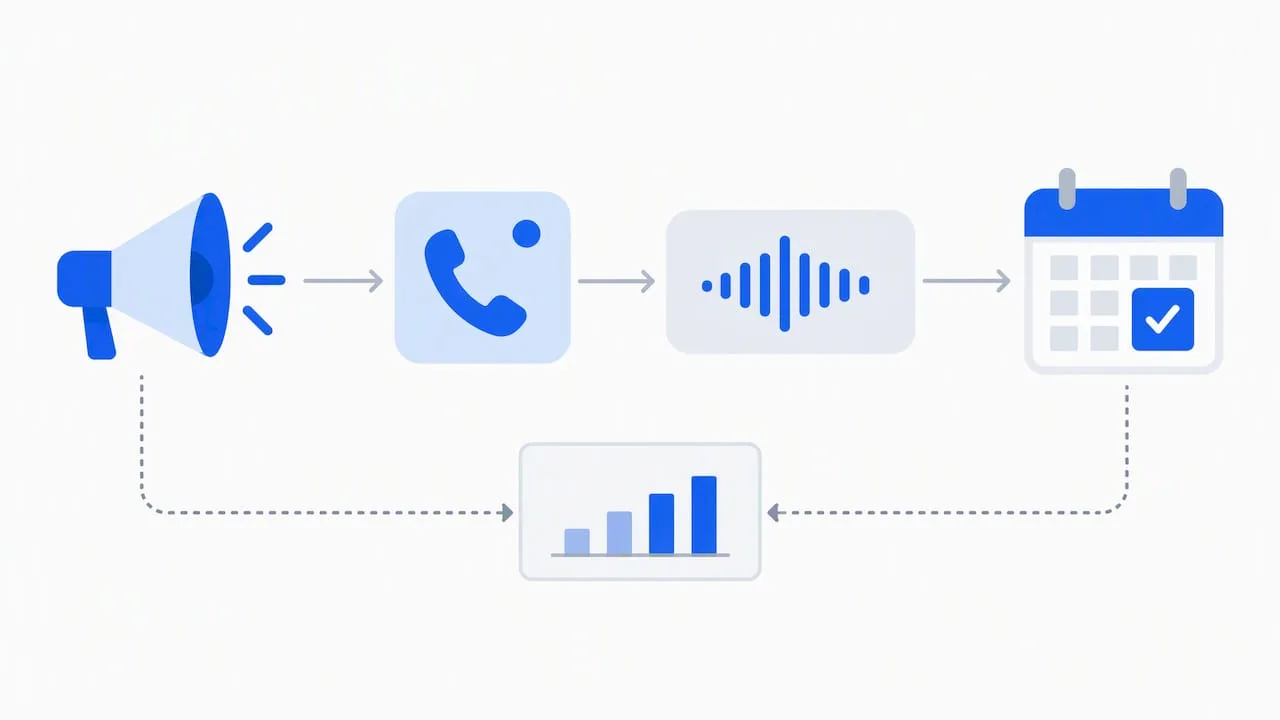
- Pick a consented list. Use a list of opted-in past customers or leads who requested an estimate.
- Write two message variants. Keep each brief. Change one thing, like the offer or the opening line, so you can see what moved the result.
- Set one KPI. Callback-to-booking rate is the cleanest measure for a contractor.
- Run the pilot for a limited period. Split the list evenly between the variants and send during local business hours.
- Log everything. Record send times, delivery confirmations, callbacks, opt-outs, and whether each callback became a booked job.
- Decide. If callbacks arrive at a healthy pace and a meaningful share turn into booked jobs, scale gradually. If callbacks are weak or opt-outs climb, revise the message or tighten the list before spending more.
Set your thresholds before you start, so you are not tempted to rationalize a weak result afterward. Then iterate: keep the stronger script, segment by job type or recency, and test again.
When is ringless voicemail the right channel for contractors?
My view: ringless voicemail earns its place in three situations: appointment reminders, nurturing leads who opted in, and re-engaging people who got an estimate recently but went quiet. It is a poor fit for cold blasts to purchased lists, where it mostly buys you spam flags and headaches. It is also a poor fit for a team that cannot spare the time to run pilots, read the numbers, and adjust. If that is you, an integrated website plus automation setup may turn leads into booked jobs more reliably than managing outreach tech yourself, and the next section explains how we handle that.
— Tyson
How can we handle lead follow-up for you instead?
Some contractors want booked jobs, not another tool to manage. That is where we come in. We build websites that book jobs, then connect them to missed-call text-back and CRM automations and an AI voice agent that answers when your crew cannot. If you have no time to run pilots and want one managed system, see our plans and pricing or book a consult.
FAQ
Which providers offer ringless voicemail?
Several vendors offer it across self-serve platforms, wholesale-style drop services, and enterprise suites, including Slybroadcast, Drop Cowboy, LeadsRain, and VoiceSend AI. Many CRMs also include voicemail drops as a built-in feature. Match the provider type to your volume and technical comfort before comparing brands.
Are ringless voicemail drops legal?
They can be, but the format does not exempt you from prerecorded-message rules. The FCC’s TCPA rules set the requirements, so collect and document consent before sending. For gray areas, consult an attorney.
How much does ringless voicemail cost?
Costs usually combine a monthly plan with per-drop fees, while wholesale models charge less per message but may add minimums or setup fees. Message length, personalization, and add-ons change the total. Ask each vendor to quote a sample cost for a pilot.
Is there a way to block ringless voicemail?
Recipients can opt out by asking you to stop, and you should honor that immediately. Consumers can also register their numbers through donotcall.gov, and responsible senders screen lists against it. Some carriers and devices also filter suspicious messages, which is another reason to use only consented lists.