Target service, intent, and local modifier keywords first, phrases like “EV charger installation [neighborhood]” or “emergency electrician near me”, then build service pages and claim a Google Business Profile around them. The single most useful first move is to claim and optimize your Google Business Profile and publish three service pages targeting your highest-intent terms. We put this guide together after watching which keyword patterns turn electrical contractor searches into booked jobs.
TL;DR:
- Focusing on location-specific and service-specific keywords, such as “panel upgrade cost Providence” or “EV charger installer in [neighborhood],” significantly increases the likelihood of conversions.
- Prioritizing the optimization of your Google Business Profile and publishing three high-intent service pages early on drives faster local calls compared to extensive content or multiple pages.
- Keyword placement in titles, meta descriptions, headings, and URLs is more effective than keyword stuffing; consistency across these elements improves your local visibility.
- Tracking call and booking metrics over time reveals whether your SEO efforts generate actual leads, as ranking well without calls indicates a need for keyword refinement.
- Starting with claiming your GBP, then launching a few targeted service pages and collecting reviews, yields quicker results than delaying these foundational steps or overloading content.
Table of Contents
- Curated Keyword Clusters and a Compressed Master List
- How to Use Keywords on Your Website and Google Business Profile
- Local-Ready Examples and Content Templates
- Tools, Metrics, and a Lightweight Research Process
- Content Ideas and Page-Level Priority Roadmap
- Author and Publisher Credibility: Why This Advice Is Practical
- What a Small Electrical Shop Should Actually Do First
- How These Steps Map Onto Our Services
- FAQ
- Sources
Curated Keyword Clusters and a Compressed Master List
Head terms like “electrician” draw volume but little intent. A modifier, a service, a location, an urgency word, turns a browser into a caller. “Electrician” tells Google almost nothing about what someone needs; “panel upgrade cost Providence” tells it everything.
Group your targets by service, then add long-tail variations for each:
- Panel upgrades: “200 amp panel upgrade cost,” “electrical panel replacement near me,” “old fuse box replacement,” “panel upgrade for home addition” (transactional)
- EV charger installation: “EV charger installer [neighborhood],” “Level 2 charger installation home,” “Tesla charger install cost,” “EV charger permit electrician” (transactional/informational mix)
- Lighting: “recessed lighting installation,” “outdoor lighting electrician,” “landscape lighting install near me,” “LED retrofit commercial” (transactional)
- Rewiring: “whole house rewiring cost,” “knob and tube wiring replacement,” “rewire older home electrician,” “aluminum wiring repair” (informational leading to transactional)
- Commercial services: “commercial electrician near me,” “office electrical maintenance contract,” “tenant fit-out electrician,” “commercial panel inspection” (transactional/navigational)
Emergency and local phrases deserve their own bucket because they convert fastest: “emergency electrician near me,” “24/7 electrician [city],” “power outage electrician tonight,” “electrician open now.” These are almost always transactional, the searcher wants a phone number in the next ten minutes, not an article.
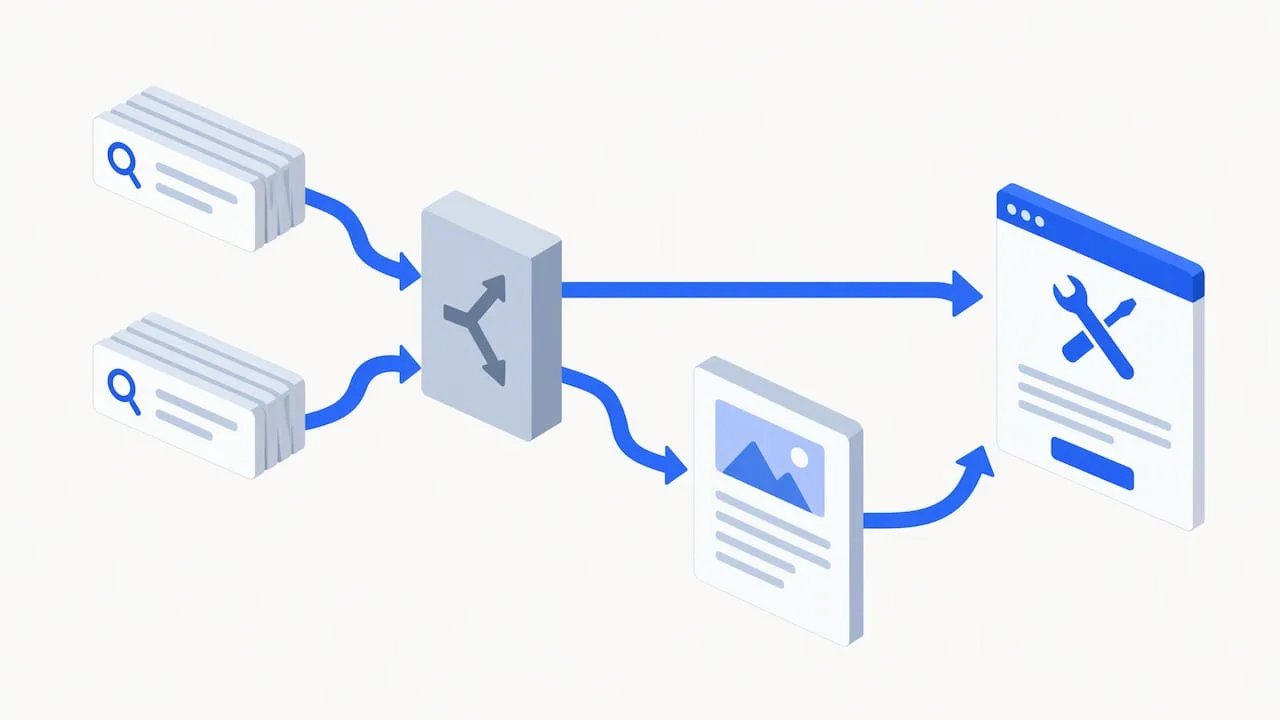
Keep a short informational layer too, things like “how much does rewiring a house cost” or “what size panel do I need”, since these feed blog content that funnels readers toward your service pages rather than competing directly for the call-now searches.
How to Use Keywords on Your Website and Google Business Profile
Placement matters more than repetition. One well-placed keyword in a title tag outperforms the same word stuffed five times into a paragraph.
- Title tag: lead with the service and city, “Panel Upgrades in [City] | [Business Name].”
- Meta description: restate the service plus a reason to call, kept under 155 characters.
- H1 and H2s: match the title’s intent, then break out subservices in H2s.
- Opening paragraph: state what you do and where within the first two sentences.
- URL: short and service-specific, “/panel-upgrades” not “/services/page-4.”
On Google Business Profile, keywords belong in the services list, the business description, and regular posts, not in the business name field. Google’s own guidance warns against stuffing the business title or address with extra keywords and recommends choosing the most specific, accurate categories rather than treating categories as a keyword list. A business named “Smith Electric, Panel Upgrades & EV Chargers” risks a suspension, not better rankings.
Prioritize transactional service pages and make your phone number and booking button impossible to miss above generic informational content; a visitor who already typed “emergency electrician” doesn’t need a history of your company before they need a way to call.
Pro Tip: Put your phone number in the header on every page, not just the contact page, since most service searches end in a call, not a form.
Local-Ready Examples and Content Templates
Templates save time and keep keyword placement consistent across pages. Here’s a starting set.
- Service page: Title “EV Charger Installation in [City],” H1 restates the title, opening paragraph names the service and area, bulleted list of related services (panel checks, permits, charger brands supported), FAQ block answering cost and timeline questions, CTA with phone number and a booking link.
- Blog post for long-tail terms: Headline poses the search question directly (“How Much Does a Panel Upgrade Cost in 2026?”), opens with the homeowner’s problem, walks through cost factors and steps, ends with a CTA linking to the relevant service page.
- GBP post: A short update tied to immediate intent, “Same-day panel inspections this week, call before 5 PM for next-day service,” works better than a generic company announcement because it mirrors how someone searches in a moment of need.
Reuse the same structure across every service you offer; consistency helps you update pages faster and helps visitors find what they need without relearning your site layout each time.
Tools, Metrics, and a Lightweight Research Process
You don’t need an expensive platform to validate keyword choices. Google Search Console shows which queries already bring visitors to your site, and GBP Insights shows what people search before calling or requesting directions from your profile. Pair those with Google’s Keyword Planner or a low-cost tool for rough volume estimates, exact numbers matter less than relative popularity between your candidate terms.
- Score each keyword on intent, estimated volume, competition, and how close it matches your actual service area, then rank candidates by combined score rather than volume alone.
- Track what happens after a click: calls, form submissions, and booked jobs matter more than rankings on their own.
- Revisit your target list every 60 to 90 days, dropping terms that bring traffic but no calls and adding new service or seasonal variations.
Content Ideas and Page-Level Priority Roadmap
Build in an order that produces calls early and authority later.
- Week 1: claim and complete your Google Business Profile, publish or refresh three service pages for your highest-demand offerings.
- Weeks 2 through 6: publish local blog posts answering common cost and process questions, and start requesting reviews from recent jobs.
- Month 2: review which pages are generating calls, test paid local ads only where organic traffic is still thin.
Service pages and GBP tend to produce calls within weeks; blog content builds authority and feeds long-tail searches over months. Track call volume, booked jobs, and the conversion rate from page visit to contact over a few months to understand whether the keyword work is paying off.
Author and Publisher Credibility: Why This Advice Is Practical
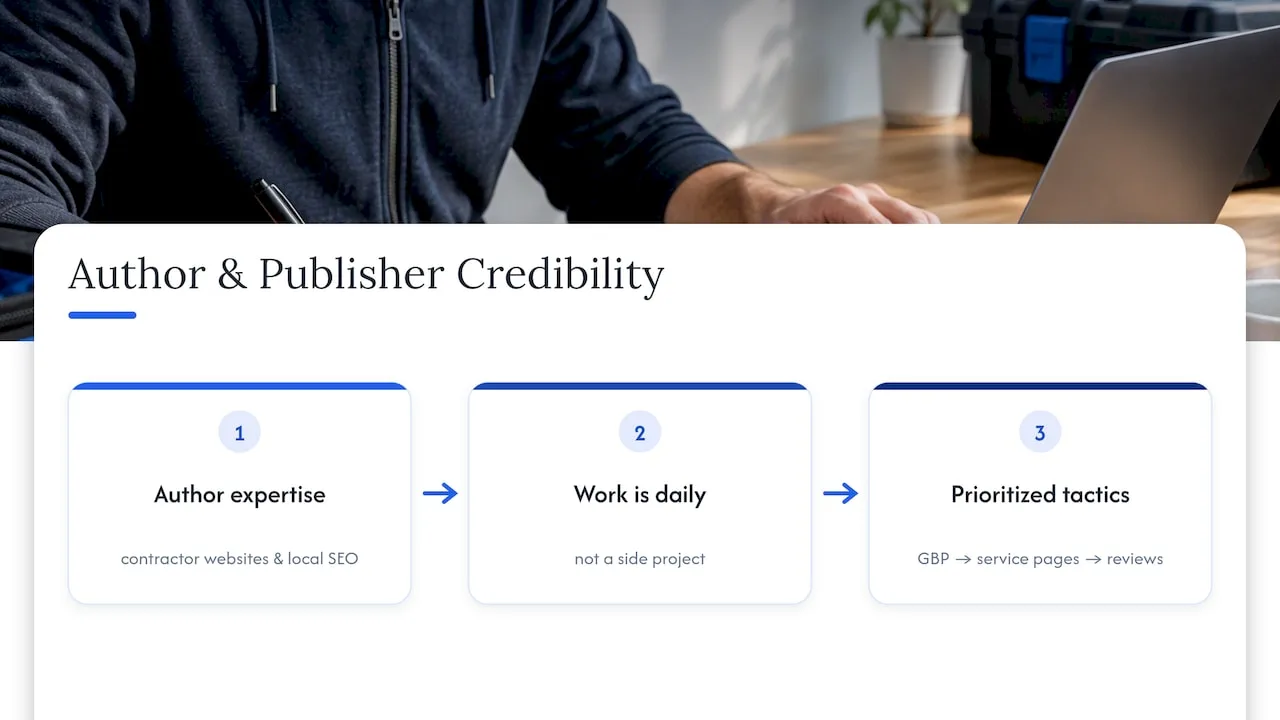
This guide comes from Tyson, who specializes in contractor websites and local SEO campaigns, which are his daily work, not a side project. The prioritization order here, GBP first, then service pages, then reviews, reflects contractor-focused digital marketing guidance showing that local SEO and GBP are typically the highest-return free tools available to trades businesses, which is why they come before any paid effort.
What a Small Electrical Shop Should Actually Do First
Skip the twelve-page content calendar in week one. Claim your Google Business Profile, confirm your name, address, and phone number match everywhere you’re listed, and publish or update one high-intent service page, panel upgrades or EV chargers usually win. In month one, add two long-tail blog posts, start asking every finished job for a review, and watch your call log, not your rankings. A page that ranks but never rings is a page that needs a different keyword, not a victory lap.
— Tyson
How These Steps Map Onto Our Services
We built our service list around this exact roadmap. Websites that book jobs cover the service-page and template work above, Local SEO & Google Business Profile handles the GBP setup and ongoing optimization, and Missed-call text-back & CRM along with our AI voice agent catch the calls these keywords generate so none go unanswered. Our reviews that keep coming service keeps the review flow steady once jobs start booking.
An engagement typically includes a built or refreshed website, a completed GBP profile, and a tracked call and booking system, with results measured against the same metrics outlined here: calls, booked jobs, and conversion rate, as detailed at Setworks. Rhode Island and Massachusetts electrical contractors can see current plans on our pricing page.
FAQ
What are good keywords for SEO?
Good keywords combine a specific service with an intent signal and, for local businesses, a location: “panel upgrade cost Providence” beats “electrician” because it matches what someone actually types when ready to call. Pair a handful of these with informational long-tail questions for blog content, and prioritize the transactional ones on your service pages.
What is SEO in electrical?
For electrical contractors, SEO means optimizing your website and Google Business Profile so people searching for services like panel upgrades, rewiring, or EV charger installation find and call you instead of a competitor. Local ranking depends mainly on relevance, distance, and prominence, not on which business spends the most money.
How to make $200,000 as an electrician?
Income at that level typically comes from a mix of commercial work, specialized services like EV charger installation, and steady lead flow rather than any single tactic; the Bureau of Labor Statistics describes electricians working across homes, businesses, and industrial settings, and higher-paying work usually sits in the commercial and specialty segments. Consistent local visibility and a full job calendar matter more than any one marketing trick.
What is a catchy phrase for electrical safety?
There’s no single official industry slogan, but short, direct phrases like “If in doubt, call it out” or “Respect the volts, protect your home” are common in safety materials because they’re easy to remember in an emergency. For marketing, pairing a safety phrase with your emergency phone number tends to work better than the phrase alone.