90 Day Electrician SEO Playbook That Lowers Cost Per Verified Lead
Coastal Connect

More qualified local calls and booked jobs, not higher rankings, is the actual point of electrician SEO. The single highest-leverage move you can make today is fixing your Google Business Profile and publishing one strong service page tied to your most profitable service, whether that’s panel upgrades or EV charger installs. Expect small movement in the first few weeks and measurable call volume in three to six months.
TL;DR:
- Fixing your Google Business Profile by optimizing categories, photos, and service area settings is crucial for local electrician visibility and lead generation.
- Prioritizing emergency and project keywords with high buying intent, verified via cost-per-click and existing search volume, maximizes ROI from SEO efforts.
- Building dedicated service and city landing pages with unique content, local relevance, and internal links improves search rankings and conversion rates.
- Consistent review collection, citation accuracy, and technical site speed are vital for maintaining trust signals and organic performance.
- Combining verified lead tracking with a full-system approach from a specialized agency reduces wasted marketing dollars and accelerates measurable results.
Table of Contents
- What Is Electrician SEO and Why Does It Matter?
- Google Business Profile and Local Pack Fundamentals for Electricians
- Keyword Research for Electricians: Service + Intent Matrix
- Service Pages and City Landing Pages That Convert
- Content Strategy: Hyper-Local, Seasonal, and Job-Specific Pages
- Technical SEO Essentials: Speed, Schema, and Mobile Experience
- Reviews, Reputation, and Citation Consistency
- Tracking, Attribution, and Measuring Verified Leads
- Timeline, Costs, and What to Realistically Expect
- Common Mistakes and Red Flags to Avoid
- How Coastalconnect Helps Electricians Compete Locally
- Backlink Strategy Tailored for Electricians
- Managing Local Citations and Directory Listings Beyond Google Business Profile
- Content Marketing Beyond Static Pages: Blogs, FAQs, and Video
- Integrating Paid Ads With Your SEO Strategy
- Tools and Software Electricians Actually Need
- Your Week-One Checklist
- Get a Local SEO System Built for Your Trade
- Sources
- FAQ
What Is Electrician SEO and Why Does It Matter?
Electrician SEO is the practice of making your business visible in local search results and Google Maps when someone nearby searches for an electrician, whether that’s a homeowner with a dead outlet at 9 p.m. or a contractor bidding a commercial remodel. It’s a subset of local SEO for contractors, which also covers plumbing local SEO, roofing company SEO, and landscaper SEO. The mechanics differ slightly by trade, but the core system is identical: a strong Google Business Profile, service pages built around what people actually search for, and enough reviews to signal trust to both Google and the homeowner scrolling their phone.
Most electricians who try SEO on their own get one piece right and ignore the rest. They’ll build a website but never touch their Google Business Profile, or they’ll chase reviews but publish a single generic “services” page that ranks for nothing. Electrician local SEO works as a system, not a single tactic. Every piece below builds on the last one.
Google Business Profile and Local Pack Fundamentals for Electricians
Your Google Business Profile is the single most important asset in electrician SEO, full stop. When someone searches “electrician near me” or “emergency electrician [city],” Google’s local pack, those three map listings above the organic results, is what most people click. If your profile isn’t dialed in, you’re invisible in the exact moment someone needs you most.
Start with categories. Your primary category should be “Electrician,” not “Contractor” or “Home Improvement Store.” Secondary categories can include things like “Electrical Installation Service” or “Electrical Repair Shop” if they apply. Getting this wrong is one of the most common reasons electricians never crack the top three map results, even with decent reviews.
Service area settings matter almost as much. If you serve a 25-mile radius from three towns, list those specifically rather than a vague county name. Verify your phone number, since Google occasionally flags unverified numbers and suppresses them from the pack. Add a booking or messaging link if you can handle inbound texts, because a growing share of homeowners will message before they call.
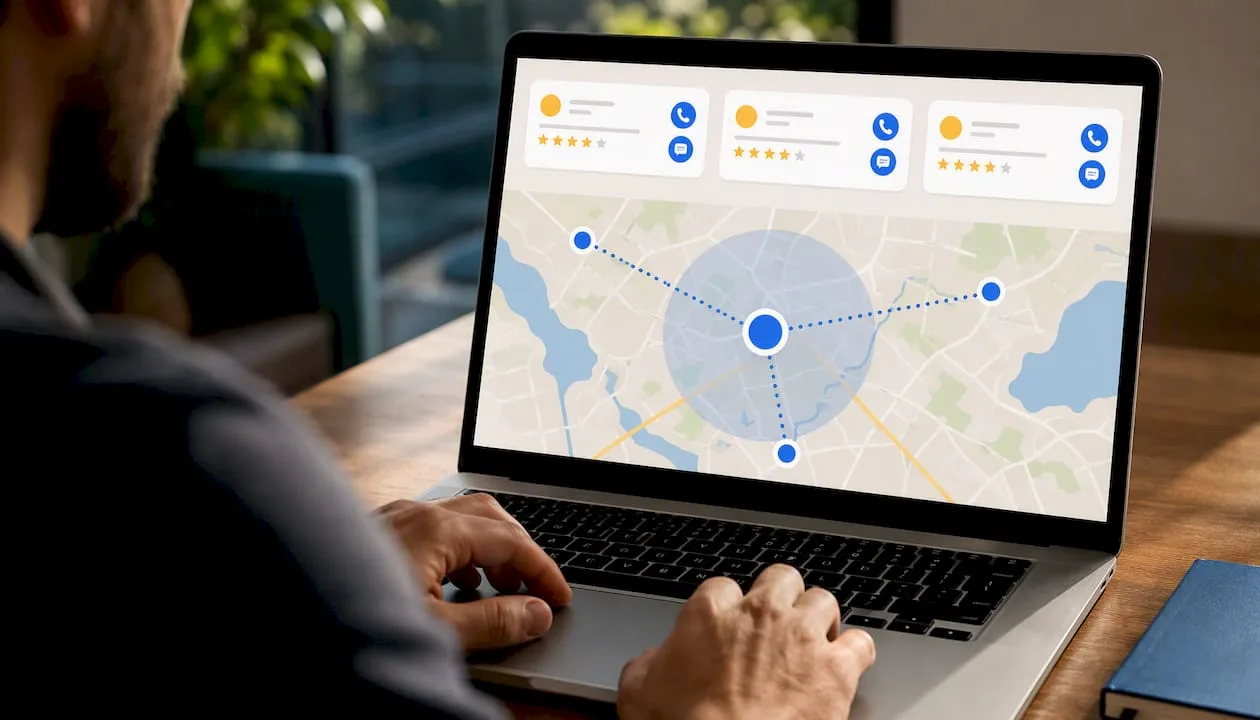
Photos are an underused lever. Profiles with a steady stream of real job photos, panel swaps, EV charger installs, finished panel labels, tend to outperform static profiles with stock imagery. One Google Maps business listing shows how consistent photo activity and contributor engagement keep a profile looking active, which matters because Google visibly favors listings that show ongoing activity over ones that sit untouched for a year.
A few quick wins most electricians skip:
- Answer every Q&A on your profile yourself before a competitor or random user answers it with wrong information.
- Post job updates weekly, even a single photo with a two-sentence caption.
- Respond to every review within 48 hours, good or bad.
- Keep your hours accurate, especially holiday hours, since incorrect hours quietly kill trust signals.
Pro Tip: Set a recurring 15-minute Friday calendar block just for your Google Business Profile. Upload two job photos, answer any new questions, and respond to reviews. That’s the entire habit, and it beats a one-time overhaul every single time.
Keyword Research for Electricians: Service + Intent Matrix
The fastest way to waste money on electrician SEO is optimizing for keywords nobody with a wallet is actually searching. The fix is building a simple matrix with your services down one side and search intent across the top, then prioritizing by how close each term sits to someone ready to book.
- List every core service as a row. Panel upgrades, EV charger installation, generator hookups, rewiring, troubleshooting, lighting installs, commercial electrical work, whatever you actually offer.
- Split intent into three columns: emergency, project, and informational. “Emergency electrician near me” and “power went out electrician” sit in the emergency column. “EV charger install [city]” and “panel upgrade cost [city]” sit in the project column. “How many amps does my house need” sits in informational, useful for content but not for a service page.
- Rank each cell by commercial intent first, then volume. A term with modest search volume but obvious buyer intent, like “200 amp panel upgrade [city],” beats a high-volume but vague term like “electrical tips.”
- Use cost-per-click as a signal, not gospel. If advertisers are paying $15 to $40 a click on a keyword in Google Ads, that’s a strong hint real jobs are behind that search. Google Keyword Planner will show you this even if you never run a paid campaign.
- Run free site: searches on your own domain and competitors’ domains to see which pages are already indexed and ranking, which tells you where the gaps sit.
Emergency-tier keywords deserve their own landing pages because the searcher’s mindset is completely different from someone comparing quotes for a kitchen remodel rewire. Someone searching at 11 p.m. wants a phone number above the fold, not a paragraph about your company history. Project-tier keywords, meanwhile, convert better with pricing ranges, process explanations, and photos of finished work, since that searcher is comparing three or four contractors before calling anyone.
Plumbing SEO keywords and roofing SEO keywords follow this same emergency versus project split, which is why the matrix approach transfers cleanly across trades even though the specific services differ.
Service Pages and City Landing Pages That Convert
One dedicated page per core service, and one city page per area you genuinely service, outperforms a single “Services” page every time, because each page can target its own keyword cluster and speak directly to that searcher’s intent. A generic services page tries to rank for everything and usually ranks for nothing.
Every service page needs the same core skeleton, adjusted for the service:
- A concise H1 and title tag combining the service and city, like “Panel Upgrades in [City], [State],” not a vague headline.
- Click-to-call phone number visible above the fold on mobile, since most local searches happen on a phone in the moment of need.
- A short explanation of the process: what happens on the first visit, how long the job takes, what the homeowner should expect.
- Price ranges or clear booking guidance. You don’t need exact pricing, but “most panel upgrades run $1,800 to $3,500 depending on panel size” builds more trust than silence.
- Trust signals: your license number, insurance status, and a small cluster of recent reviews specific to that service.
- Real project photos from actual jobs, ideally with a permit or inspection note where relevant, since that detail alone separates a real local business from a templated page.
The mistake most electricians make with city pages is swapping the city name into an identical template across ten pages. Google’s algorithms are built to catch exactly this pattern, and thin duplicate-content city pages routinely get filtered out of search results entirely. A real city page needs something unique to that location, a note about older housing stock needing panel upgrades in one town, a mention of new EV charger rebates in another, a reference to permit timelines with that specific municipality.
Internal linking ties the whole structure together. Link from your homepage to each service page, from each service page to relevant city pages, and from blog content back to the service page it supports. This helps Google understand your site’s structure and helps homeowners find the exact page that answers their question.
Pro Tip: If you only have budget to build three pages this quarter, build your highest-margin service page, your busiest city page, and one emergency-intent page. That combination captures the searches most likely to convert into a signed job, not just a phone call that goes nowhere.
Content Strategy: Hyper-Local, Seasonal, and Job-Specific Pages
Generic “what does an electrician do” blog posts don’t move the needle anymore, largely because AI-powered search assistants now answer those generic questions directly inside the search results, before a user ever clicks through to a website. Content that survives this shift is the content AI can’t fully answer: real job breakdowns with your own numbers, specific permit and inspection notes for your municipality, and pricing examples tied to actual jobs you completed.
A workable content cadence looks like this:
- Publish one detailed case study per month with before-and-after photos, the actual scope of work, and a realistic price range, tied back to the relevant service page.
- Build seasonal readiness content twice a year: generator prep before storm season, holiday lighting circuit safety before winter, air conditioning circuit checks before summer.
- Write emergency-specific guides that answer the exact panic-mode questions homeowners search, like “why did my breaker trip and won’t reset” paired with a clear call-to-action for same-day service.
- Create one EV charger installer guide per service area covering permit requirements, panel capacity considerations, and rebate programs specific to that state or utility.
- Add a short FAQ block to every service page answering the three or four questions you get asked most often on the phone.
Know when to automate versus hand-write. Templated seasonal reminder posts or basic FAQ expansions can be produced at scale without much handcrafting. Your highest-intent pages, emergency service pages, your best-converting city page, your flagship case studies, deserve a human writing them, because that’s where a generic paragraph costs you a job. Consumer reliance on AI tools for search keeps climbing, and the pages that keep winning are the ones with specific, local, verifiable detail that a general AI answer simply can’t replicate.
Technical SEO Essentials: Speed, Schema, and Mobile Experience
A slow website loses jobs before a homeowner ever reads a word of your copy. Test your site on an actual cellular connection, not just office WiFi, since that’s the real-world condition most searches happen under. If your homepage takes more than three seconds to load on a phone, compress your images, since oversized job photos are the single most common cause of slow electrician websites. Lazy-load anything below the fold, like a testimonials carousel or a map embed, so it doesn’t compete with your click-to-call button for loading priority.
Schema markup helps Google understand exactly what your business does and where, which supports both organic rankings and rich results in search. A handful of schema types matter most for an electrical contractor site:
- LocalBusiness schema on your homepage and contact page, listing your name, address, phone number, and service area.
- Service schema on each individual service page, describing that specific offering.
- Review schema where genuine, verified reviews are displayed, which can surface star ratings directly in search results.
- FAQ schema on pages where you’ve added a genuine question-and-answer block.
- Offer schema if you run seasonal promotions like a free panel inspection.
Run a basic technical audit quarterly:
- Check for crawl errors in Google Search Console.
- Confirm HTTPS is active sitewide with no mixed-content warnings.
- Verify canonical tags aren’t accidentally pointing duplicate pages at the wrong URL.
- Run a quick accessibility check, since alt text on job photos and readable contrast ratios help both accessibility and SEO simultaneously.
None of this requires a computer science degree, but it does require someone checking it on a schedule rather than once at launch and never again.
Reviews, Reputation, and Citation Consistency
Review velocity, how consistently new reviews come in, tends to matter more to local rankings than your total review count. A business with three reviews last month often outranks a competitor sitting on 40 reviews from two years ago. That’s why review generation has to be a system, not a one-off ask.
Build the ask into your workflow rather than hoping for the best:
- Send an SMS review link within an hour of job completion, while the relief of a fixed electrical problem is still fresh.
- Train your crew to mention reviews verbally before they leave the job site, since a verbal heads-up roughly doubles the odds someone follows through on the text.
- Set up an automated follow-up flow that sends a second reminder three days later if no review has come in.
- Segment happy customers from frustrated ones with a quick internal check before sending the public review link, and route unhappy customers to a private feedback form instead.
Respond to every review, not just the five-star ones. A thoughtful, specific response to a critical review, acknowledging the issue and stating what you changed, often does more for trust than another glowing testimonial. Use recurring complaints as an actual operations signal. If three reviews in a row mention late arrival, that’s not bad luck, that’s a scheduling problem worth fixing.
Citation consistency, meaning your business name, address, and phone number matching exactly across every directory, is a quieter ranking factor but a real one. Run a quick audit across your top ten citation sources and fix any mismatch, an old suite number, a dropped area code, a slightly different business name, since these small inconsistencies confuse Google’s confidence in your actual location.
Pro Tip: Keep a single master document with your exact NAP (name, address, phone) formatting and paste from that document every time you claim a new directory listing. Inconsistent formatting is the single most common citation mistake, and it’s entirely preventable.
Tracking, Attribution, and Measuring Verified Leads
Rankings don’t pay your crew, verified leads do. Set up call tracking with dynamic number insertion so every call from your website, Google Business Profile, and any paid campaign gets tagged to its source. Pair that with form tracking so every contact form submission is attributed to the specific landing page that generated it.
- Install call tracking and form tracking before you spend another dollar on SEO or ads. Without this, you’re guessing which channel actually produces booked jobs.
- Add a verification layer on top of raw contact volume. Phone verification, basic bot filtering, and simple intent scoring separate a real homeowner call from a wrong number, a spam bot, or an out-of-area lead that will never convert. Raw inbound volume without this layer routinely overstates how many contacts are actually usable.
- Track cost per verified lead as your primary KPI, not cost per click and not raw traffic. A practitioner framework built around verified leads rather than traffic volume applies directly to electrical contractors, since the goal in every trade is the same: fewer wasted dollars on contacts that never become jobs.
Beyond cost per verified lead, track calls per month attributed to organic search specifically, and booking rate by individual landing page, since that last metric tells you which service pages are actually converting versus which ones just look good. A partner resource on measuring where leads leak out of your funnel offers a useful framework if you want to dig deeper into where booked-but-lost jobs are slipping away between first contact and signed work order.
Timeline, Costs, and What to Realistically Expect
Early wins, a fixed Google Business Profile, one or two new service pages, tend to show up within the first few weeks in the form of profile views and small ranking movement. Meaningful organic call volume typically takes three to six months to build, since Google needs time to trust a newly optimized site and newly published pages. Genuine market dominance in a competitive metro area can take up to a year of consistent work.
Budget expectations vary widely depending on how much you handle yourself versus delegate:
- DIY tooling runs low, mostly your time plus the cost of a keyword research tool and maybe a review-automation platform, but it demands hours you may not have during busy season.
- Boutique agency retainers for contractors typically include GBP management, ongoing content, and basic technical maintenance, and should always include transparent reporting tied to verified leads, not just rankings or traffic.
- A pilot campaign for 90 days is the smartest way to test any vendor: fix the fundamentals, measure cost per verified lead against your baseline, and only commit to a longer engagement once you see the number move in the right direction.
The Bureau of Labor Statistics projects continued demand for electrical work nationally, which means competition for search visibility in most metro areas isn’t going away. Starting the fundamentals now, rather than waiting for slow season, matters more than picking the perfect vendor on day one.
Common Mistakes and Red Flags to Avoid
Doorway pages, thin city pages that just swap a place name into an identical template, get filtered out of search results and waste the money spent building them. Vague monthly reports that show traffic charts but never mention lead quality or verified call volume are a red flag that a vendor is optimizing for a metric that doesn’t pay your bills.
Watch for these specific warning signs:
- Any promise of “guaranteed rankings,” since no legitimate provider controls Google’s algorithm.
- Unpaid or scammy link-building schemes that risk a penalty rather than building genuine local authority.
- Fake or duplicate citation listings created just to inflate a directory count.
- Paying per click or per lead with no tracking layer to confirm those leads are real, local, and ready to book.
If a proposal doesn’t mention verified leads, call tracking, or cost per booked job, ask why before signing anything.
How Coastalconnect Helps Electricians Compete Locally
Coastalconnect builds the full system electricians need to convert local searches into booked jobs: high-converting websites, AI-powered SEO, automated follow-up sequences, review automation, and 24/7 inbound call handling so no lead goes unanswered overnight. The approach treats a contractor’s website as a lead-generation engine rather than a digital brochure.
Evaluate any agency, Coastalconnect included, against a short list of real criteria:
- Does the provider report cost per verified lead, not just traffic or rankings?
- Do they build individual service pages, not a single generic page trying to cover everything?
- Do they have a system for review generation, or do they leave it up to chance?
- Can they explain their process in plain terms, or does everything sound vague?
Some clients in the contractor industry have reported significant ROI increases within the first 90 days, driven by the combination of a conversion-focused site, automated review requests, and reliable lead response practices. You can compare that against your own current numbers by requesting a free growth audit from Coastalconnect before committing to any longer engagement.
Backlink Strategy Tailored for Electricians
Link building for a local electrical contractor looks nothing like link building for an e-commerce brand, and that’s a good thing, because it’s more achievable. The most valuable backlinks for an electrician come from genuinely local sources: your local chamber of commerce, a supplier or manufacturer you’re an authorized installer for, a trade association chapter, or a local news outlet covering a storm-related power outage story you helped with.
Local citation sites, business directories that list your name, address, and phone number, act as a foundational layer of this strategy even though they’re not traditional backlinks in the classic sense. Getting listed accurately on the major directories builds a baseline of trust signals that supports everything else.
Partnerships with complementary trades pay off here too. A relationship with a local HVAC company, a general contractor, or a solar installer can produce natural links and referral traffic, since homeowners doing a major renovation often need more than one trade at once. Sponsor a local youth sports team or trade school program and ask for a link on their sponsors page, since that’s a legitimate, easy-to-earn local link most electricians never bother pursuing.
Avoid link schemes that promise fast results, mass-purchased directory links, private blog networks, or link farms. These tactics carry real penalty risk and rarely produce the kind of local relevance that actually moves rankings for a service-area business like yours.
Managing Local Citations and Directory Listings Beyond Google Business Profile
Citations, your business name, address, and phone number listed on directories, form a layer of trust signals separate from your Google Business Profile, and they need their own maintenance schedule. Beyond the major platforms, dozens of smaller directories, trade-specific listings, and regional business databases carry your NAP data, and inconsistencies across them quietly undermine Google’s confidence in your actual business location.
Start with an audit of your top 15 to 20 citation sources. Search your business name and phone number, and note every place your information appears, paying close attention to old addresses, dropped suite numbers, or slightly different business name formats left over from a rebrand or ownership change. Fix each mismatch directly on the platform where it lives, since these can’t be corrected from a single dashboard.
Trade-specific directories deserve particular attention for electricians. Licensing board listings, electrical contractor associations, and manufacturer “find an installer” pages carry more topical relevance than generic business directories, and they tend to attract exactly the kind of high-intent searcher who’s already decided they need a licensed electrical contractor rather than someone comparing service categories.
Treat citation management as ongoing infrastructure rather than a one-time cleanup project. Businesses that revisit and correct their citation profile regularly consistently outperform competitors who set it up once and never look at it again, since a stale listing eventually drifts out of sync as a business moves, adds a location, or changes phone providers.
Content Marketing Beyond Static Pages: Blogs, FAQs, and Video
Static service pages do the conversion work, but blog posts, FAQ content, and video fill the gap that keeps prospective customers engaged before they’re ready to call. A blog post breaking down “how much does it actually cost to upgrade a 100 amp panel to 200 amps” answers a real research-stage question and builds trust well before that reader is comparing quotes.
Video content works especially well for electrical work because it’s inherently visual. A 90 second clip showing a panel swap from start to finish, or a homeowner explaining why they called for an EV charger install, does more to build confidence than three paragraphs of text ever could. Post these directly to your Google Business Profile as well as YouTube, since video content embedded on a service page also tends to keep visitors on the page longer.
FAQ content deserves its own strategy beyond a token block at the bottom of a service page. Pull your actual most-asked phone questions, “is it normal for my breaker to trip during a storm,” “how long does a panel upgrade take,” “do I need a permit for a generator hookup,” and answer each one directly, ideally with FAQ schema attached so the answer has a shot at appearing directly in search results.
Keep the cadence realistic. One solid blog post or video per month, tightly connected back to a service page or city page, outperforms an inconsistent flood of generic content that never ties back to anything a homeowner can actually book.
Integrating Paid Ads With Your SEO Strategy
Google Ads and Local Services Ads aren’t competitors to organic SEO, they’re a faster on-ramp while your organic pages build authority. Local Services Ads in particular are built for trades like electrical work, since they display your Google-verified badge, reviews, and a direct call button above almost everything else on the results page, and you pay per lead rather than per click.
Run paid campaigns on your highest-intent, highest-margin services first, panel upgrades, EV charger installs, generator hookups, while your organic service pages for those same terms climb the rankings in the background. Once a page starts pulling organic calls consistently, you can dial back paid spend on that specific term and redirect budget toward a service that still needs the lift.
The biggest mistake here is running ads without the same verified-lead tracking layer you’d want on organic traffic. A lead-scoring framework, even a simple one, helps separate a real booked appointment from a tire-kicker who clicked an ad and never answered a follow-up call. A structured approach to lead scoring built for B2B teams translates surprisingly well to home services, since the underlying goal, ranking leads by actual buying intent before your crew wastes a trip, is identical.
Treat paid and organic as one measurement system, not two separate budgets reported in isolation. Cost per verified lead should be the number you compare across both channels.
Tools and Software Electricians Actually Need
You don’t need a dozen subscriptions to run a competent electrician SEO program. A focused stack covers nearly everything:
- Google Search Console and Google Business Profile Manager, both free, for monitoring rankings, fixing profile details, and catching technical errors.
- Google Keyword Planner, free with a Google Ads account, for checking search volume and cost-per-click signals even if you never run a paid campaign.
- A review-automation platform that sends SMS or email review requests automatically after a job closes, rather than relying on your crew to remember.
- Call tracking software with dynamic number insertion so every call gets attributed to the page or campaign that generated it.
- A basic site speed tester like Google’s PageSpeed Insights to catch slow-loading images before they cost you mobile visitors.
- A citation management tool to monitor and correct NAP consistency across directories without manually checking each one.
Most electricians don’t need enterprise-grade software here. What actually moves the needle is consistency: checking the same handful of tools on the same schedule every week, rather than a sporadic deep dive every few months followed by months of neglect.
Your Week-One Checklist
Run this in order: fix your Google Business Profile categories and photos, publish one strong service page for your highest-margin service, turn on call tracking, request three recent reviews from happy customers, run a mobile speed test, add basic LocalBusiness schema, and launch one small pilot ad campaign to fill the gap while organic builds.
If you decide to hire help instead of doing this alone, ask three questions on the first call: How do you measure success, verified leads or just traffic? Can I see an example of a service page you’ve built for another trade? What happens in the first 30 days? A vendor who can’t answer clearly probably can’t execute clearly either.
— Tyson
Get a Local SEO System Built for Your Trade
Coastalconnect is the alternative to piecing together five different tools and hoping they work together, one system covering your website, SEO, review automation, and call handling, built specifically for contractors in Rhode Island and Massachusetts rather than adapted from a generic small-business template.
Instead of guessing whether a new page or a new review request actually moved the needle, you get a baseline cost-per-verified-lead number before the work starts and a way to compare it after 90 days. That transparency is the entire point: no vague traffic charts, no promises about rankings that don’t translate into booked jobs. If you’re currently juggling a freelance web designer, a separate review tool, and an answering service that misses half your calls, consolidating into one system built for electrical contractors specifically tends to close more of those gaps than adding a fourth vendor to the pile.
Request a free growth audit at Coastalconnect and get a real baseline on your current verified lead cost before deciding what to fix first.
Sources
- Occupational Outlook Handbook: Electricians | U.S. Bureau of Labor Statistics
- Share of people who use generative AI as primary search assistance in the U.S. | Statista
- Roofing SEO: The 5 Pillars and the Verified-Lead Layer | Elevarus
FAQ
Can Electricians Make $200,000 a Year?
Top-earning electricians, especially those who own their business and combine strong project work with efficient lead generation, can reach six figures, though the Bureau of Labor Statistics shows wide variation by region and experience level. Reaching that upper range usually depends more on consistent, high-margin bookings than on any single job type.
How Much Does It Cost to Pay Someone for SEO?
Costs vary from a modest DIY tooling budget to several thousand dollars a month for a full-service retainer that includes content, technical maintenance, and review automation. The right number depends less on the price tag and more on whether the provider reports cost per verified lead rather than vague traffic metrics.
What Are the Best Keywords for Electricians?
The best keywords combine a service with location and clear buying intent, like “panel upgrade [city]” or “emergency electrician near me,” rather than broad terms like “electrical services.” Splitting keywords into emergency, project, and informational tiers, as covered earlier in this guide, helps prioritize which ones to target first.
How Long Does Electrician SEO Take to Work?
Early movement on Google Business Profile and new service pages often shows up within a few weeks, but meaningful organic call volume typically takes three to six months to build. Full market dominance in a competitive area can take up to a year of consistent work.
Does Coastalconnect Work Specifically With Electricians?
Coastalconnect builds websites, SEO campaigns, and automation systems for contractors across several trades, including electrical, plumbing, HVAC, and roofing, with each system tailored to that trade’s service and intent structure. The company’s landing page outlines the full scope of services available to electrical contractors.
Recommended
Want this done for your business?
Get a free audit. We'll look at your site, your Google profile, and your phones, and send you a checklist of exactly what to fix.