90 Day AI Playbook for Contractors: Fix Data First for Local SEO
Coastal Connect
Fix your data governance and Google Business Profile before you touch any AI tool. Once your location data is accurate everywhere, layer in structured data (schema markup), then deploy AI workflows with human review for content, reviews, and monitoring. Businesses that get this order backwards end up with AI systems confidently repeating wrong hours, dead phone numbers, or services they no longer offer.
TL;DR:
- Ensuring data governance and Google Business Profile accuracy is crucial before deploying AI tools to prevent spreading outdated or incorrect local information.
- Implementing structured data, such as schema markup, significantly improves AI systems’ ability to interpret and surface your business details reliably.
- Using AI tools for local SEO requires a focus on verified source data, consistent NAP details, and human review, as automated outputs often contain inaccuracies or hallucinations.
- Building a local knowledge base with verified reviews, neighborhood references, and service details greatly enhances AI’s hyperlocal content accuracy and recommendation relevance.
- Ongoing monitoring and regular updates of your source-of-truth data are essential to maintaining trustworthy AI-driven local visibility over time.
Table of Contents
- What Should You Prioritize First With AI for Local SEO?
- Seven Moves to Start Using AI for Local SEO Today
- Which AI Tools Actually Help Local Rankings?
- How Do You Make Your GBP and Citations Trustworthy for AI?
- What Technical Signals Do AI Systems Actually Read?
- How Do You Prompt AI to Produce Hyperlocal Content?
- How Do You Know If AI Is Actually Recommending You?
- What Does a 90-Day AI Local SEO Rollout Look Like?
- How Coastal Connect’s Services Map to This Playbook
- Local 5.0 Isn’t a One-Time Project
- Ready to Put This Into Practice?
- Sources
What Should You Prioritize First With AI for Local SEO?
Start with the boring stuff. AI recommendation engines, whether that’s a chatbot answering “best plumber near me” or a voice assistant reading out a business listing, pull from whatever data is easiest to find and most consistent across sources. If your Google Business Profile says one thing, your website says another, and Yelp has your old address, an AI system has no reliable way to pick a winner. It often just skips you.
This is the practical case for treating AI for local SEO as a data problem before it’s a content problem. The framework getting traction among agencies right now is often called Local 5.0: the idea that AI-first visibility depends on governed source-of-truth data, consistency across every touchpoint, and ongoing measurement rather than a one-time optimization push, according to Search Engine Land’s local AI playbook. It’s a useful mental model because it forces a sequence: clean data first, structured signals second, automated workflows third.
Here’s the order that actually works, and why skipping steps backfires:
- Data governance and GBP accuracy. One source of truth for hours, services, and location details, synced everywhere.
- Structured data implementation. Schema markup that tells AI crawlers exactly what your business is and does.
- AI-assisted workflows with human review. Content generation, review responses, and monitoring, but never fully unsupervised.
Businesses that jump straight to “AI content generation” without fixing their GBP data usually get a wave of generic blog posts that rank nowhere, while their actual location data stays wrong. AI insights for local rankings only matter once the underlying facts are correct.
Seven Moves to Start Using AI for Local SEO Today
You don’t need a six-month strategy document to start. You need seven concrete actions, most of which take under an hour each.
- Designate one source-of-truth record per location. Pick a single spreadsheet, CRM field, or internal wiki page as the master record for hours, services, and contact details. Every other platform pulls from this, not the reverse.
- Audit and complete your Google Business Profile. Fill in every service, attribute, and category field, not just the required ones. GBP entries with complete attributes tend to surface more often in AI-generated local answers.
- Fix NAP inconsistencies. Your name, address, and phone number need to match character-for-character across your website, GBP, and every directory listing you have.
- Publish LocalBusiness and FAQ schema. This is the machine-readable layer that lets AI systems parse your business facts instead of guessing from unstructured text.
- Set up llms.txt and check your robots.txt. Make sure AI crawlers can actually reach your key service and location pages.
- Automate structured review requests and responses. Reviews with clear service and location context give AI systems more evidence to cite.
- Build basic monitoring. Track when and how AI tools mention your business so you know if the previous six steps are working.
- Data governance
- GBP completeness
- NAP consistency
- Schema markup
- Crawler access
- Review automation
- Monitoring
Pro Tip: Assign one person as the “data owner” for each location. When five people can edit your GBP hours, you get five different versions of the truth, and AI systems inherit that confusion.
Which AI Tools Actually Help Local Rankings?
Not every AI tool marketed for local SEO does what it claims. Three categories consistently deliver, and one common workflow mistake consistently backfires.
Listings automation platforms sync your source-of-truth data across GBP and directories automatically, catching drift before a customer sees a wrong phone number. Local knowledge retrieval systems, often built on retrieval-augmented generation (RAG), pull from verified local data rather than a general-purpose language model’s training set, which matters because general models still struggle badly with local specifics. One recent benchmark found the best-performing agentic search models correctly answered complex local, multi-hop queries only about 35.6% of the time, a strong argument for feeding AI systems your own curated data instead of trusting them to know your neighborhood. Review automation and sentiment tools flag negative reviews for immediate human response and draft replies for approval.
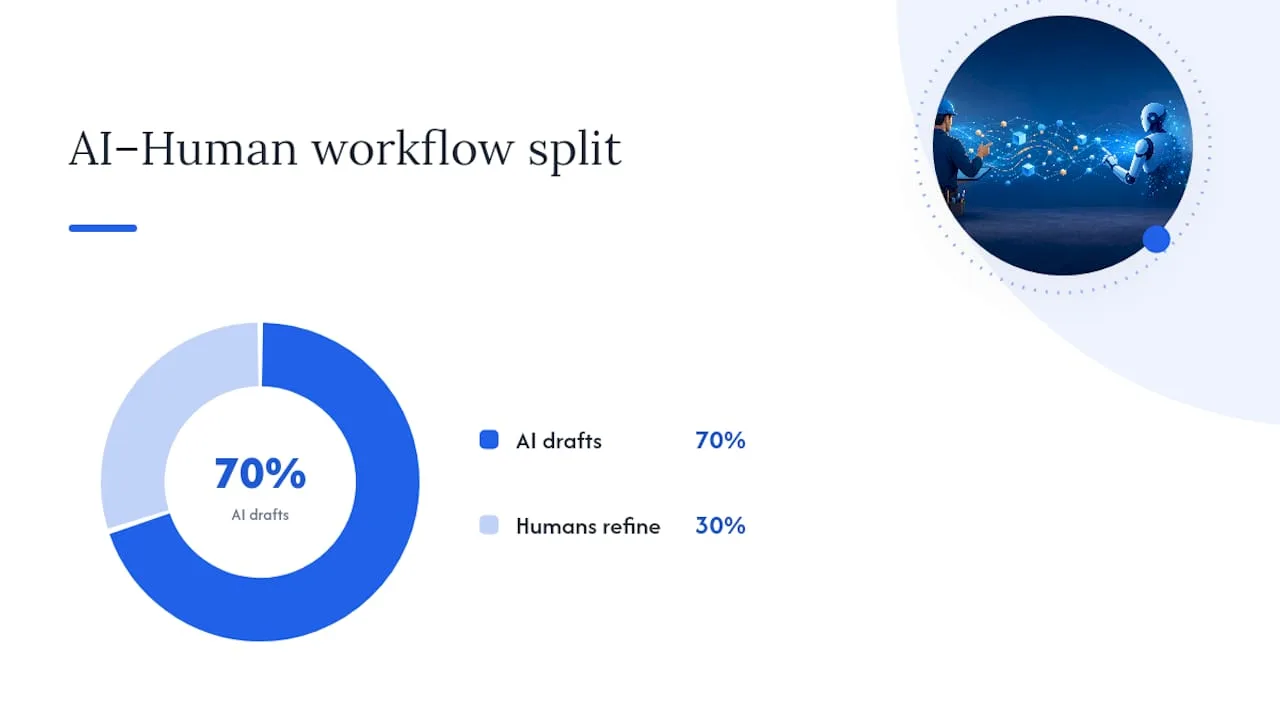
The workflow ratio that holds up in practice is roughly 70/30: AI drafts, humans refine. Machine learning local SEO tools are excellent at volume and pattern detection, weak at nuance and current facts.
Humans should always review:
- Anything mentioning specific pricing or promotions
- New or changed service claims
- Review responses touching complaints or disputes
- Location-specific details (parking, access, seasonal hours)
Pro Tip: Run a monthly spot-check where you ask three different AI assistants what your business offers. Mismatched answers usually point to a stale data source feeding the models.
Common failure modes include hallucinated certifications, generic copy that could describe any business in your category, and mismatched hours between your website and GBP. Each one erodes the trust AI systems place in your listing.
How Do You Make Your GBP and Citations Trustworthy for AI?
AI systems weigh evidence, not marketing copy. A Google Business Profile with complete, consistent, third-party-verified data reads as more trustworthy than one with a nice description and gaps everywhere else.
Prioritize these GBP fields in this order:
- Services and categories. List every service you actually perform, not just your primary category.
- Attributes. Wheelchair accessibility, appointment requirements, payment types. These get pulled into AI answers frequently.
- Hours, including holiday hours. Outdated hours are one of the most common reasons AI tools give wrong answers.
- Photos and, where relevant, product or menu listings. Recent, geotagged photos support location authenticity.
Reconciling NAP data across your website, GBP, and third-party directories takes ongoing attention, not a one-time cleanup. A practical routine:
- Export your GBP data monthly and compare it against your source-of-truth record.
- Search your business name plus city quarterly to catch outdated directory listings you didn’t create.
- Correct discrepancies within a week of finding them, since stale data compounds the longer it sits uncorrected.
Reviews deserve special attention because AI systems increasingly parse them as structured evidence, not just star ratings. Automating review requests right after a completed job increases volume, but the quality of what’s in those reviews matters more than the count. A review that mentions your service area, the specific job type, and a timeframe gives an AI system far more to work with than “Great service, would recommend.”
Keep a simple change log for every edit to your GBP, website contact block, and major directory listings. Note the date, what changed, and who approved it. This isn’t busywork. Being cited by third-party authoritative local sources, community publications, review sites, and local directories matters because AI models rely on evidence beyond a business’s own website, according to Search Engine Land’s analysis of local AI evidence signals. A clean internal record makes it far easier to spot when a citation goes stale or a third-party source picks up an old address.
What Technical Signals Do AI Systems Actually Read?
Schema markup is the single highest-leverage technical fix most local businesses skip. Schema defines the exact properties AI crawlers look for: name, address, telephone, openingHoursSpecification, priceRange, and areaServed at minimum. Add FAQPage schema to any page answering common customer questions, since that structure maps almost directly to how conversational AI tools format their own answers.
Validate every implementation at Validator before publishing. The most common mistakes are minor but costly: mismatched hours between the schema and the visible page text, missing required properties, and duplicate LocalBusiness markup on multiple pages that confuses crawlers about which location a page describes.
Industry reporting suggests structured data can materially increase the odds of being surfaced in AI-generated answers, though the exact lift varies by report and business category, according to one 2025 industry analysis of AI-driven local search.
Beyond schema, three technical checks matter for automated local SEO solutions:
- llms.txt. This emerging standard tells AI crawlers which pages to prioritize, similar in spirit to a sitemap for AI systems rather than search engines.
- Robots.txt review. Confirm you’re not accidentally blocking AI crawlers from your service or location pages.
- Mobile speed. Slow-loading pages get abandoned by both users and crawlers before they render your schema.
- IndexNow. Use it to push freshness signals immediately after updating hours, pricing, or service pages, rather than waiting for a crawl cycle.
How Do You Prompt AI to Produce Hyperlocal Content?
Generic prompts produce generic content. The fix isn’t a better AI model, it’s better inputs.
Feed your prompts and RAG indexes with real local context: neighborhood names as locals actually use them, nearby landmarks, seasonal events, and verified review excerpts. A study on geographic reasoning in AI recommendation systems found that encoding spatial signals directly into the reasoning process improved point-of-interest recommendation accuracy by more than 10% relative to standard AI baselines. Translation for a local business: telling an AI system where you actually sit relative to landmarks and service boundaries measurably improves how well it recommends you.
Practical prompt structures that produce usable output:
- Location pages: “Write a 300-word service page for [service] in [neighborhood], referencing [landmark] and [local event], written for homeowners who searched [specific pain point].”
- FAQ content: “Answer this exact customer question using only these verified facts: [list]. Do not add information not provided.”
- Review replies: “Draft a reply to this review mentioning the specific job type and neighborhood, in a tone that’s warm but professional.”
Build a running RAG index (a local knowledge base the AI draws from) fed with your verified service list, actual customer review language, and neighborhood-specific details. AI-driven local business growth tools that skip this step and rely on the model’s general training data produce copy that reads like it was written about no particular place at all.
Pro Tip: Keep a running document of the exact phrases your customers use to describe your neighborhood or service area. Locals rarely search or talk the way marketing copy does, and feeding that language into your prompts closes the gap.
How Do You Know If AI Is Actually Recommending You?
Traditional rank tracking doesn’t capture what matters anymore. Gartner projected a meaningful shift in search volume patterns as AI chatbots absorb more discovery queries, which means link clicks alone undercount your real visibility.
Track these instead:
- AI mention frequency. How often does your business come up when someone asks an AI assistant for recommendations in your category and area?
- Citation accuracy. When you are mentioned, are the hours, services, and contact details correct?
- GBP action rate. Calls, direction requests, and website clicks originating from your profile.
- AI-driven conversions. Leads that mention finding you through a conversational AI tool, tracked via intake forms or call scripts.
| KPI | How to Measure | Suggested Check-In |
|---|---|---|
| AI mention frequency | Manual prompts across major AI assistants monthly | Monthly |
| Citation accuracy | Compare AI answers against source-of-truth record | Monthly |
| GBP action rate | Native GBP Insights dashboard | Weekly |
| AI-driven conversions | Intake form field or call script question | Ongoing |
Set an alert threshold: if citation accuracy drops below what you consider acceptable, or GBP action rate falls for two consecutive weeks, that’s your trigger to re-audit your source-of-truth data before anything else.
What Does a 90-Day AI Local SEO Rollout Look Like?
A realistic rollout splits into three phases, each building on the last.
- Weeks 1 to 2: Establish your single source-of-truth record and complete a full GBP cleanup, fields, categories, hours, attributes, photos.
- Weeks 3 to 6: Implement LocalBusiness and FAQ schema across key pages, build a basic RAG index with verified data, and turn on automated review requests.
- Weeks 7 to 12: Scale hyperlocal content production using tested prompts, stand up your monitoring dashboard, and refine prompts based on what the KPI data shows.
“Done” for this rollout doesn’t mean perfect. It means your source-of-truth data is accurate and synced everywhere, your schema validates cleanly, review automation is running with human oversight, and you have at least one full monthly reporting cycle showing AI mention frequency and citation accuracy trends. Anything short of that first milestone means the later phases are built on a shaky foundation.
How Coastal Connect’s Services Map to This Playbook
Coastalconnect builds this exact sequence into its work with contractors, rather than treating AI SEO as a bolt-on service. Website design, AI-powered SEO, and Google Business Profile optimization handle the data governance and structured signals covered above. Automated review requests and 24/7 inbound call handling extend the human-in-the-loop review model into everyday operations, so leads and reviews get captured instead of missed. Contractors working this way should expect the KPI shifts described earlier: more accurate AI citations, higher GBP action rates, and a measurable rise in AI-driven conversions within the first reporting cycles.
Local 5.0 Isn’t a One-Time Project
The businesses that win with AI local visibility aren’t the ones with the flashiest chatbot integration. They’re the ones treating their data like an asset that needs ongoing maintenance, not a form you fill out once and forget. AI mention frequency and citation accuracy will drift the moment your hours change and nobody updates the source-of-truth record. That’s not a hypothetical risk. It’s the default outcome of doing nothing.
What gets underestimated most is how much of this work is governance, not technology. The tools matter less than the discipline of keeping one accurate record and letting every other platform sync from it. Local SEO optimization with AI rewards businesses that treat consistency as a daily habit, not a quarterly audit.
— Tyson
Ready to Put This Into Practice?
Reading a playbook and implementing one are different things, especially when you’re running a contracting business and don’t have hours to spend auditing schema markup or reconciling directory listings. Coastalconnect is the alternative to piecing this together yourself or hiring a generalist marketing firm: it’s a system built specifically for plumbing, HVAC, electrical, and roofing companies in Rhode Island and Massachusetts, where the AI workflows, GBP management, and review automation described in this guide are already running for contractors like you.
Coastalconnect combines AI-powered SEO, Google Business Profile optimization, automated review and follow-up systems, and 24/7 inbound call handling into one setup instead of five separate vendors you’d have to manage yourself. Clients working with Coastalconnect often observe improved ROI within the first 90 days, the same window this guide’s rollout plan covers. If you’re ready to stop losing calls to voicemail and start showing up accurately when customers ask AI tools for a contractor near them, see how Coastalconnect can help your business and get a custom plan built for your trade and service area.
Sources
Want this done for your business?
Get a free audit. We'll look at your site, your Google profile, and your phones, and send you a checklist of exactly what to fix.